
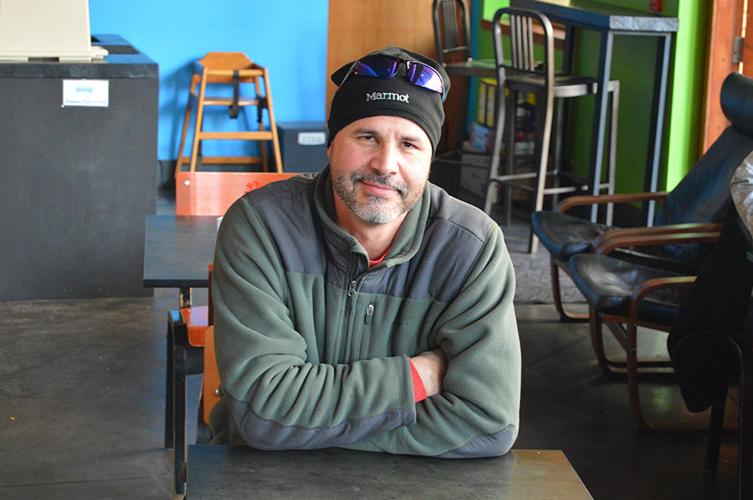
Kirk Miller has a day job — he’s a software designer at Insitu — and, with his 50 hour work weeks, you’d think that would be enough to keep him plenty busy.
Spoiler alert: It’s not.
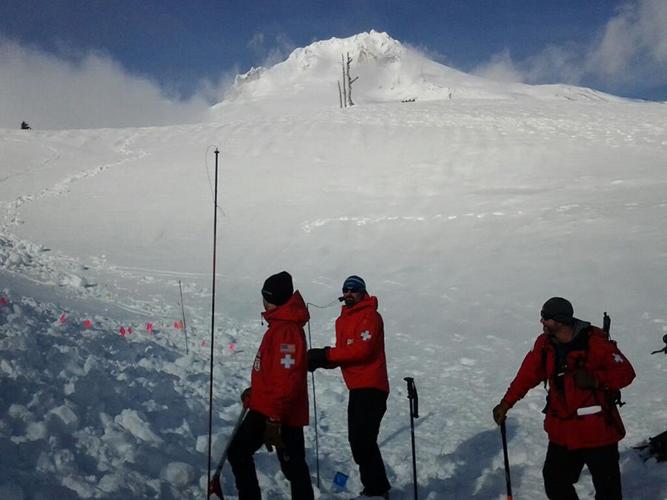
This is Miller’s fourth year as a volunteer member of the Mt. Hood Ski Patrol. Unlike pro patrollers, who cover all resort locations on Mount Hood year round, volunteers commit to working at Mt. Hood Meadows one day every other weekend — for Miller, that’s Sunday — during the season, which generally runs November through May.
With Megan Spears we began “Saturday Spotlight,” our new weekly feature, succeeding Slice of Life. “Spotlight” will focus on how local people spend their days. Do you have a person in mind for Spotlight? Send ideas to Trisha Walker at twalker@hoodriver....
Ski patrol serves as “a release from my normal day to day routine, so it’s a nice break for me,” he said. “However, Monday morning after a long day of patrolling can be very difficult.”
A day on patrol starts early, with an “all-hands meeting before the sun comes up with (Mt. Hood Meadow’s) pro patrol to get briefed on the day ahead,” he said. Briefing includes weather and snow conditions, groups on the mountain that day, and “anything else the patrol leads feel the group should be aware of,” he said. Next, patrollers are given an opening assignment and spend the next couple of hours preparing for the day’s guests.
“The rest of the day is spent actively engaged with whatever the mountain can throw at us,” he said. “Weekends can be very busy, with a steady stream of patients in need of on-mountain medical assistance, skiers or snowboarders to be found, rope lines to be fixed, and a wide assortment of related activity.
“The last hour or so is spent closing the resort, with the primary responsibly being to make sure everyone has made it safely off the slopes.”
He finds ski patrol “an interesting and unique blend of being part of a team dynamic, yet you are out there on your own, to a large extent, and it’s up to you how that case is going to go,” Miller explained. “Perhaps the analogy is a tennis team, but the cause can be dead serious at times.”
When a call for help comes over the radio, “as a first responder to a case, your focus begins by taking an immediate assessment of the situation at hand and determining how to safely secure the patient, as well as yourself,” Miller said. After an initial evaluation to determine the seriousness of the injury, the patroller “takes a more detailed assessment of the patient’s condition, determines what equipment and/or assistance is needed, and then works to get the patient to a higher level of care as quickly and safely as possible.”
The most common injuries Miller sees are lower leg injuries (such as sprained knees) for skiers and sprained or broken wrists for snowboarders. Concussions are on the rise, too — “The park contains large ramps and other obstacles, and hard landings are not uncommon,” he said.
Ski patrollers are stationed at various locations around the resort, with at least one, but usually several, in an area. If a patroller is not at the station, “they are likely skiing around the resort providing a visible and active presence. Many cases are responded to by a patroller out on the hill who happens to be close to the scene,” he said.
He trained for the position five seasons ago, an intense process that took six months, “which is done in both the classroom as well as on the mountain at each of the resorts located on Mount Hood (Timberline, Ski Bowl and Mt. Hood Meadows),” he said. The weekly four-hour classroom sessions involved medical first-responder training geared towards an alpine setting; another full day each week was spent on the mountain, “learning how to deal with the equipment and patients, in all snow conditions, and in any type of weather,” he said.
His first case on the mountain involved a young boy who had fallen 37 feet from a chair lift, and he remembers it well.
“My radio cracked to life detailing where this happened and I gulped, and took a deep breath as it dawned on me that the location was around the next bend and it was me who would be responding first,” he said. “As I skied up to the scene, not only was the child laying on the snow with obvious broken bones, but a half dozen onlookers, with camera phones out and taking it all in, were waiting as well. Thankfully, the boy’s injuries were not life threatening.”
His interest in the Mt. Hood Ski Patrol took shape, in part, thanks to his oldest son, Hayden, now 19. (He and wife, Jocelyn, also have son Nate, 16.)
“(The year before training), I had found myself at Mt. Hood Meadows every weekend, playing taxi driver for my (then) 14-year-old son, who had landed his first job at the resort,” Miller said. “Spending all of that time up there, I found myself watching the ski patrol more closely, and it struck me as a challenging way to take my love of skiing to the next level, and a great way to be part of something bigger than the somewhat selfish pursuit of endless skiing.
“What keeps me coming back is that sense of being part of something very real and meaningful, but at the same time, very loose and fun, with a band of brothers and sisters enduring the same challenges together,” Miller said. “In the end, ski patrol gets in to your DNA.”


Commented
Sorry, there are no recent results for popular commented articles.