HUSUM — On a small barnyard property nestled in Husum, a group of eight women gathered for a unique two-day course on shepherdess slaughtering and butchering Nov. 10-11. Organized by Bryn Darmody and led by Lacey Carr, the event aimed to empower women to learn more about the topic in a welcoming space.
Darmody, a seasoned sheep farmer based in Husum, expressed interest in learning how to slaughter and butcher and decided to spearhead this course.
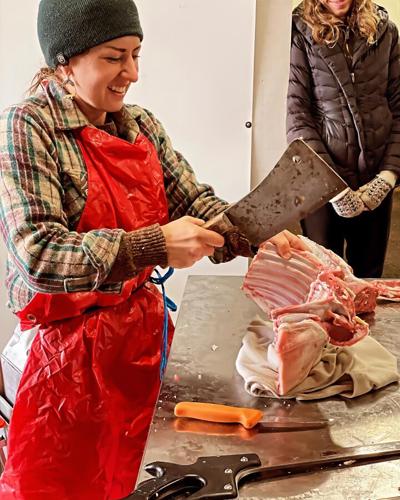
Lacey Carr demonstrates how to butcher the different parts of the sheep.
Paige Wayton photo
“I wanted it to be all women because I felt it was a rare opportunity for women to share in this, traditionally, very masculine space together,” she said.
She approached Carr with the idea, who shared similar excitement.
“There’s something about women-only gatherings that feels very special, especially as a woman myself, getting to share this and create this sort of communal bond with them,” Carr said.
Based locally in the Gorge, Carr teaches all things sheep including slaughtering, butchering and tanning through her company Fire Heart Shepherdess. Here, she also sells sheep products such as hides, earrings and tallow soap and offers meat shares with sheep she butchered.
“To me, it feels crucial to the human experience to be involved in caring and sustaining our own life,” Carr said. “Whether that’s learning how to make your own bread, sewing your own clothes or butchering your own animals, I think that it creates a sense of gratitude and satisfaction.”
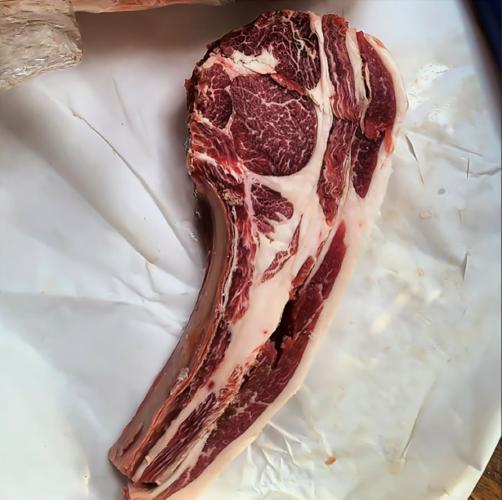
A large shoulder chop of a 5-year-old sheep.
Lacey Carr photo
Her passion for sheep began with wanting to feel more responsible for the food she was providing to her family and eating herself. As she continued to learn more about sheep and what they could provide, she found others were interested in the process of slaughtering and butchery as well.
“Other people began asking if I could guide them in learning as well. From there I realized I really, really enjoy the teaching element,” Carr said. For her, it was a way to provide for the community and herself.
On the first day of the event, participants were shown the slaughtering process by Carr, which became an emotional moment for the entire group.
“When I initially dispatched, or shot, the sheep I told the group that if anybody would like to stay with the animals as they cross over and want to put your hands on them, you may,” Carr said. “I didn’t expect anybody to want to do that, but everybody put their hands on the animals and we just had this moment of silence for the passing of the animals.”
Following that, she demonstrated skimming the fat and preparing the meat to hang. On the second day, Carr taught about the anatomy and butchering of the sheep. Each participant then helped in breaking down the meat into different edible cuts and then wrapping it up to store.
“Everybody went home with some of the meat from the weekend that’ll get cooked up. I think it’s so cool everyone will continue the experience even after it’s over,” Carr said.
Understanding that slaughtering and butchering is an emotionally weighted process, Carr recommends for those who are interested, but squeamish, to start by buying meat directly from a farmer. She believes it’s important to stay at one’s comfort level to continue moving forward towards slaughtering and butchering.
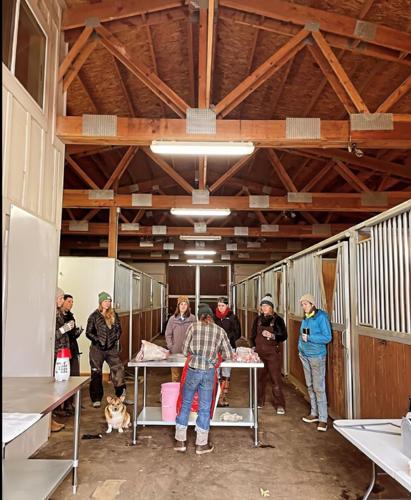
Participants and Butter the Corgi watch as Carr talks about the sheep anatomy.
Paige Wayton photo
For Chelsea deRochemont, this course was her first time experiencing processing meat. Prior, she had been vegan for a period of time and took the course out of interest in animal husbandry, which is raising and then eating animals.
“Slaughtering is something I’ve been particularly interested in because we shy away from it in American culture,” deRochemont said. “We continue to eat meat, but ignore the other aspects that come with it. I didn’t enjoy the death of the sheep, but I appreciated it and felt connected.”
deRochemont said she wanted to continue learning about food systems and become more involved in the process. “This was an opportunity to learn more about meat, as opposed to just growing vegetables and produce, which is what I normally am more connected and engaged with.”
At home, deRochemont noted she already created her own bone broth she’s excited to use in meals.
To stay up-to-date for future courses offered, including ones for all-genders, sign up for Carr’s newsletter at fireheartshepherdess.com or follow along on instagram @fireheart_shepherdess.
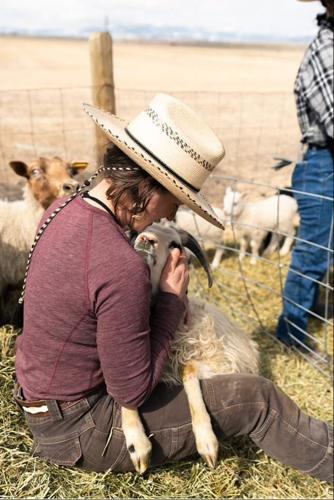
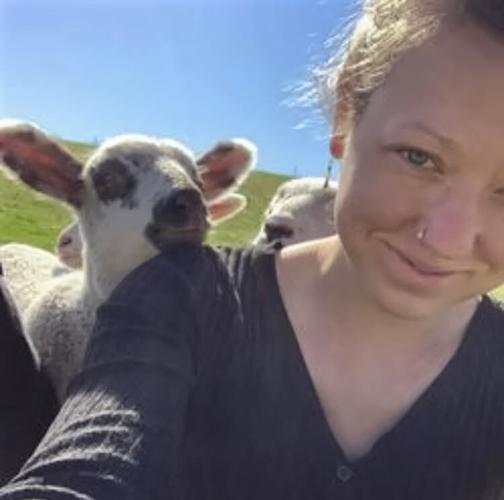
Bryn Darmody with one of her sheep from the flock.



Commented