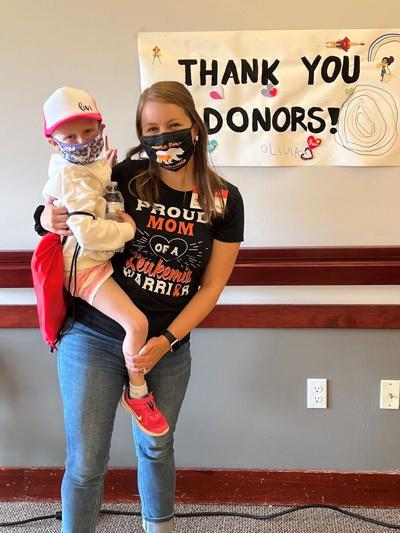
Olivia Enders, 4, was diagnosed with Acute Lymphocytic Leukemia (ALL) in August 2021. She has received 20 blood transfusions as part of her treatment. “We often think of transfusions for emergencies but forget about the need for blood transfusion for people and children battling long term diseases and cancers. Every transfusion gives Olivia another chance at life and continued success at battling her cancer and being a kid again,” said her mother, Sarah Enders.
Olivia Enders, 4, was diagnosed with Acute Lymphocytic Leukemia (ALL) in August 2021. She has received 20 blood transfusions as part of her treatment. “We often think of transfusions for emergencies but forget about the need for blood transfusion for people and children battling long term diseases and cancers. Every transfusion gives Olivia another chance at life and continued success at battling her cancer and being a kid again,” said her mother, Sarah Enders.
As summer officially begins and people gather for holiday celebrations, the American Red Cross reminds communities that patients are counting now on the generosity of blood and platelet donors, especially around the Fourth of July.
The Red Cross sees about a 21% decline in blood and platelet donations during holiday weeks, including Independence Day. When blood donations drop, so does the blood supply, making it extremely challenging to ensure blood is available when hospitals and patients need it.
Visit RedCrossBlood.org and enter your zip code to find additional blood donation opportunities near you. Oregon and Washington still require face masks be worn at all blood drives and donation sites.
How to donate blood
Download the American Red Cross Blood Donor App, visit RedCrossBlood.org, call 1-800-RED CROSS (1-800-733-2767) or enable the Blood Donor Skill on any Alexa Echo device to make an appointment or for more information. All blood types are needed to ensure a reliable supply for patients. A blood donor card or driver’s license or two other forms of identification are required at check-in.
Individuals who are 17 years of age in most states (16 with parental consent where allowed by state law), weigh at least 110 pounds and are in generally good health may be eligible to donate blood. High school students and other donors 18 years of age and younger also have to meet certain height and weight requirements.
Health insights for donors
The Red Cross is screening all blood, platelet and plasma donations from self-identified African American donors for the sickle cell trait. This additional screening will provide Black donors with an additional health insight and help the Red Cross identify compatible blood types more quickly to help patients with sickle cell disease. Blood transfusion is an essential treatment for those with sickle cell disease, and blood donations from individuals of the same race, ethnicity and blood type have a unique ability to help patients fighting sickle cell disease.
Donors can expect to receive sickle cell trait screening results, if applicable, within one to two weeks through the Red Cross Blood Donor App and the online donor portal at RedCrossBlood.org.
About the American Red Cross:
The American Red Cross shelters, feeds and provides comfort to victims of disasters; supplies about 40% of the nation’s blood; teaches skills that save lives; distributes international humanitarian aid; and supports veterans, military members and their families.
The Red Cross is a nonprofit organization that depends on volunteers and the generosity of the American public to deliver its mission. For more information, please visit redcross.org or CruzRojaAmericana.org, or visit us on Twitter at @RedCross.



Commented