People living in busy towns and cities are more likely to suffer faster spinal bone loss due to air pollution, warns new research.
Researchers found that higher recent exposure to fumes from traffic and other sources is associated with slightly faster bone loss in the spine among older adults living in urban areas, according to the study.
Lead author Dr. Sara Momtazmanesh said: "Air pollution may affect bone as well as the heart and lungs.
"In our study, higher recent exposure to nitrogen dioxide was linked to modestly faster loss of spine bone density."
Momtazmanesh, a research fellow at Johns Hopkins University School of Medicine in Baltimore, explained that nitrogen dioxide (NO2) is a harmful, reddish-brown gas that contributes to smog and acid rain.
Vehicle exhaust and power plant emissions are major sources.
Loss of vertebral bone mineral density (BMD) can weaken the spine and increase the risk of fractures, which can cause chronic pain, height loss and a hunched back.
In severe cases, spinal curvature can crowd internal organs and affect breathing.
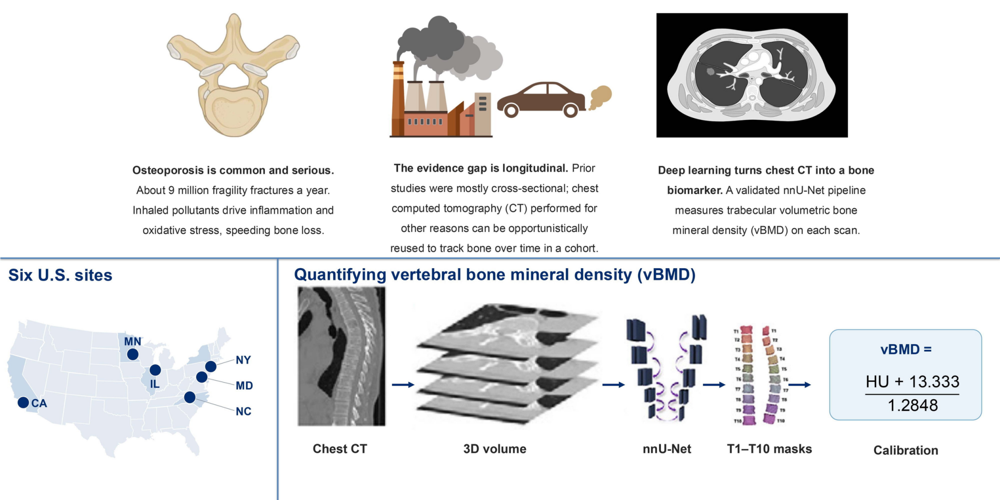
The research team used AI to help assess vertebral BMD in 1,245 participants, with an average age of 66, using two noncontrast chest CT scans per participant taken around six years apart.
(SWNS)
By Talker
Outdoor air pollution levels at each participant's home address were estimated using air-quality monitoring data, traffic patterns and local land-use information.
Participants lived in New York, Chicago, Los Angeles, Baltimore, St. Paul and Forsyth County, North Carolina.
The open-source AI tool was used to automatically identify and outline individual vertebrae on the CT scans, allowing researchers to calculate bone density in the spongy inner bone, where age-related bone loss can appear earlier.
Study senior author Dr. Shadpour Demehri, a radiology professor also at Johns Hopkins University School of Medicine, said: "Routine chest CT scans hold information about bone health that usually goes unused.
"AI can measure it automatically and track it over time, making it possible to study environmental effects on bone in large populations."
People with higher recent exposure to NO2 lost bone density in the middle of the spine at a slightly faster rate.
Momtazmanesh said: "Timing may matter.
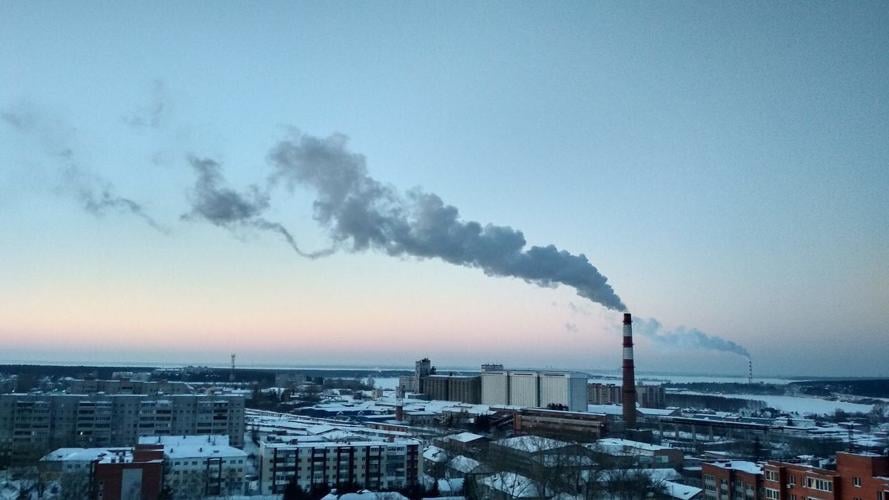
Photo by Natalie Dmay via Pexels
By Talker
"The clearest link was with nitrogen dioxide exposure in the year before the first scan, and it was less consistent for exposure averaged over the preceding decade.
"That fits with how bone renews itself, in remodeling cycles of about seven months, but it could also reflect less precise long-term estimates."
But the study found no consistent associations between fine particulate matter (PM2.5) and vertebral bone loss.
PM2.5 consists of tiny particles that can lodge deep inside the lungs and enter the bloodstream.
Sources include vehicle exhaust, industrial emissions and wildfire smoke.
Demehri emphasized that pollutants can't be fully separated, so the study cannot definitively establish whether NO2 itself accounted for the association with bone loss.
He said further research is needed to determine whether the association between air pollution and bone loss is temporary, cumulative or persistent over many years.
Demehri added: "For bone health, the established steps still matter most: staying physically active, including weight-bearing exercise, getting enough calcium and vitamin D, not smoking, limiting alcohol and asking your doctor whether bone density testing is right for you.
"More broadly, if our findings are confirmed, they would add bone health to the reasons cleaner air matters."
The findings of the study are due to be presented at the annual meeting of the Radiological Society of North America (RSNA) in Chicago next week.




Commented
Sorry, there are no recent results for popular commented articles.