A woman once wrote a letter to the editor with her ideas about how to stop all wildfires in our forest.
Her first idea was to construct agriculture water sprinklers in all 745 million acres of our national forests. Her second, to prohibit all campfires and cooking in those same forests.
She wanted people to dine on raw vegetables, fruit and soy based protein.
She’s not clear on the subject of how the sprinklers would work — are they on timers or some kind of smoke alarm? — or even where the vast amount of water needed to run them would come from.
To say this idea is unworkable is to state the obvious, but that is a good thing.
If it was to be built it would be a death sentence for our forests and the creatures that live there.
Mother Nature has been dealing with wildfires long before the first caveman learned to capture fire and take it from campsite to campsite.
If we remove the threat of fire the end product would be a climax forest so dense that nothing else could grow in the trees’ shade.
This forest would not include giant redwood, sequoia or common jack pine, though, because those trees need the intense heat of a forest fire to germinate.
Nor would there be any huckleberry, salmonberry or blueberries, because these plants need sunshine.
Come to think about it, there would be little wildlife at all: deer need meadows and shrubs for food, but shrubs also need lots of sunshine.
Black bears need downed trees filled with grubs to eat and lots of berries to build up their fat in time to hibernate for winter.
Forest fires clear the forest floor, turning debris to ash which returns nutrients to the soil.
These nutrients feed the returning grasses and plants, which grow much more quickly, and they in turn feed deer, beaver, elk and other creatures in the revitalized forest.
Forest fires also kill the diseases and insects that prey on trees, which kill more trees every year than fire.
History has taught us a lot about our forests.
First is that extreme wildfire suppression is just feeding the beast.
A lot of small wildfires clear the forest floor without generating the intense heat of a large fire that kills everything in its path.
Second, those wildfires return nutrients to the soil very quickly, making for healthier and larger trees.
Third, a dense, overgrown forest that has not seen a wildfire in generations is a disaster waiting to happen.
We have a great example of how a wildfire helps rather than hurts a forest right in our backyard.
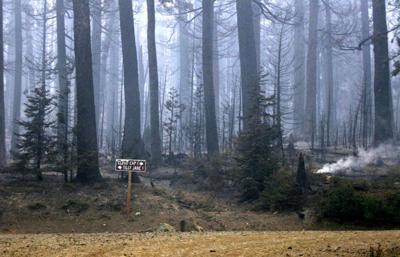
In 2001, the Gnarl Ridge Fire on the east flank of Mount Hood blew up over night, and 300-foot flames raced towards the Cloud Cap Tilly Jane Historic District.
Almost all the trees along Cloud Cap road burned to the ground.
The fire left nothing but smoldering trees, soot and ash.
Back in 2001, many of the trees were ghost trees, standing tall but dead from pine beetle.
The fire wiped out the pine beetles and today we have new, healthy trees five feet tall along the road, as well as lots of new huckleberry bushes.
In 2001 we never saw deer in the Tilly Jane campground — there was simply nothing for them to eat.
Today, we not only have a healthy deer population, but they have attracted a resident cougar as well.
I have never regretted the lightning that started that fire — it did millions of dollars worth of good.



Commented