Rain showers in the morning will evolve into a more steady rain in the afternoon. Potential for heavy rainfall. High 57F. Winds W at 10 to 15 mph. Chance of rain 90%. Rainfall near a quarter of an inch..
Tonight
Rain likely. Low 37F. Winds W at 10 to 15 mph. Chance of rain 100%. Rainfall near a half an inch.
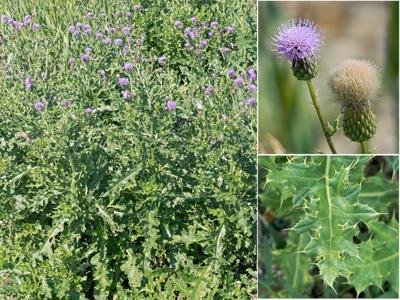
Canada thistle is a widespread invasive weed that’s a common problem in cultivated fields and pastures. It’s a perennial plant that spreads both by seed and by creeping horizontal roots (called rhizomes). This weed is very difficult to kill.
Canada thistle has multiple small pink to purple flowers that are bristly and 1/2 inch long and wide. The plants are usually 3-5 feet tall with green leaves that are glossy on the upper surface and woolly on the underside. The leaves are irregularly lobed with sharp spines. Seeds have tufts of tan hair loosely attached to the tip and are dispersed by the wind. They can remain viable in the soil for up to 20 years.
This plant reproduces both from seeds and from rhizomes. A plant can send up new shoots from its extensive root system just six weeks after germination. After one growing season a single plant can develop a root system with a 20-foot spread. Roots that are cut can grow into new plants. Tillage and cultivation will spread infestations, but may also be carefully used to control plants, as described below.
Canada thistle grows best on open, moist, disturbed areas including roadsides, meadows, pastures, ditches, campgrounds, landslides, logged and fire areas.
Control Canada thistle by hand-pulling early in the season or by tilling the soil every 3 weeks for an entire growing season. Control can also be obtained with the use of properly applied herbicides. Timely mowing can be used to prevent the plants from going to seed. Grazing is not an effective means of control as Canada thistle is not palatable and animals tend to avoid it.



Commented
Sorry, there are no recent results for popular commented articles.