In July, Yvonne Pepin-Wakefield, The Dalles, delivered ice cream to firefighters. Wildfire season, once unheard of, has changed how she uses her cabin in the Strawberry Mountain wilderness, but not her appreciation of those who shoulder the “hot, hazardous toll of fighting wildfire.”
In July, Yvonne Pepin-Wakefield, The Dalles, delivered ice cream to firefighters. Wildfire season, once unheard of, has changed how she uses her cabin in the Strawberry Mountain wilderness, but not her appreciation of those who shoulder the “hot, hazardous toll of fighting wildfire.”
I check Watch Duty and Inciweb.wildfire.gov before heading out. The apps monitor recent lightning sparked wildfires along the 200-mile stretch of road I take, twice a month, to get to my log cabin in the Strawberry Mountain Wilderness.
There was a report of the Cottonwood Canon blowup that shut part of that road down. A Facebook posting said the highways through Condon, Fossil and Spray were also closed by fires merged into the Rowe Creek Complex Fire.
I needed to meet a man I had hired to remove the creosote that could spark a fire in the stove pipe. Instead of canceling, I planned a detour past an ever-growing wildfire. Fearful my truck’s muffler could flint weeds to smoldering, I hoisted a five-gallon jug of water into the truck bed to serve as backup to the fire extinguisher in the cab.
When I built my log cabin, the creek was so flush the logs I used to build walls could be floated downstream. I would limb, pile and burn branches from those trees all summer long. Back then, there were no fire apps. Red Flag warnings were not part of the vernacular when loggers smoked cigarettes on the job and snuffed their butts in duff under foot.
Years ago, when I lived at the cabin for long summer stretches, every evening after cooking dinner on an open flame by the Creekside barbeque pit, I stoked a bathhouse fire. Afterwards, I’d light a stove fire for added ambiance when I read before the stove grate.
Once I could see the forest for the trees. Now, I no longer see the beauty in the forest first, but what will char and scar and reshape it and how to prevent this. Now, any fire sparking activity is snubbed.
On my return to The Dalles, I checked fire apps and messages. The reason the man never showed up to clean the stove pipe is because he was called out on fire.
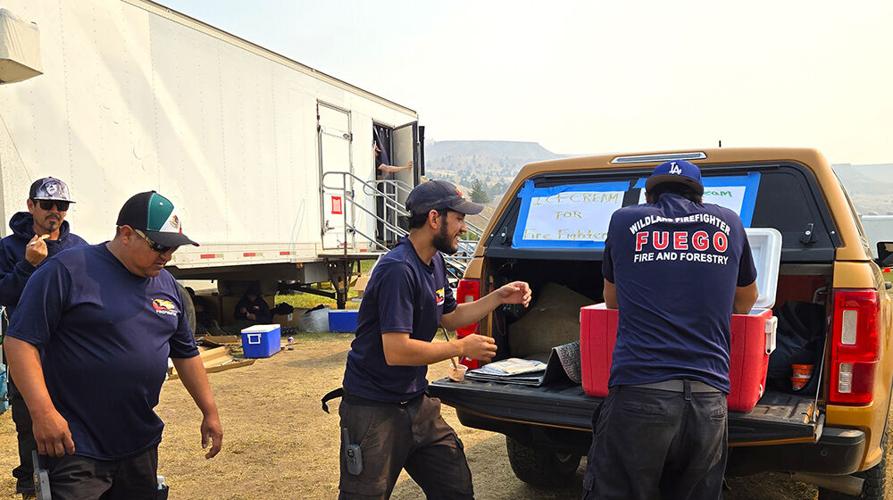
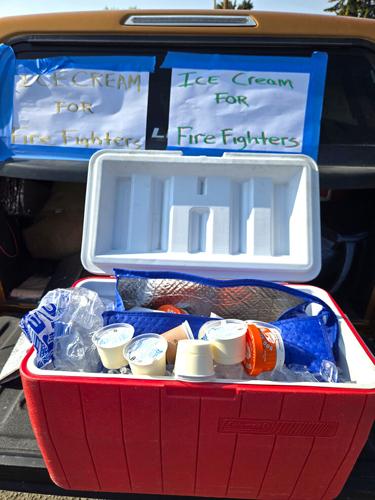
The donation of ice cream, before it was devoured.
Yvonne Pepin-Wakefield photo
Back in The Dalles, monitoring the surrounding wildfires stirred up sentiments of my first fire evacuation in 2015. I stayed in the back of my truck at a fire camp, initially as an evacuee of the Grant County, Canyon Creek Complex Fire, and later returning with my two registered therapy dogs to set up a petting station before the chuck wagon.
“This is the best part of my day,” weary fire fighters would say as they petted or picked up a pup.
These firefighters taught me that simple things can take the edge off the hot, hazardous toll of fighting wildfire.
At that point, providing pet therapy in fire camps is not possible. But ice cream? That could be a welcome respite to the firefighters battling recent fires in Wasco and Hood River counties.
“We are not taking donations,” I was informed after inquiring about how to get ice cream to fire fighters.
Two weeks after the last detour to my cabin, I bought 100 sealed cups of vanilla and chocolate ice cream. Shannon’s Ice Cream donated 100 wooden spoons. Swell Gelato for Dogs pitched in a cooler, ice packs and cups of gelato. I’d hand ice cream out to firefighters along the drive as I’d seen others do, over the last two summers, giving cold bottles of water or Gatorade to those coming off operation zones.
Facebook had postings of fire camps in Fossil and Spray. There was no fire activity surrounding either town. When I pulled over, I found my “Ice Cream for Fire Fighters” signs had blown off the back window. I hastily penned replacements, then checked the cooler. The icepacks were not holding. The top layer was getting mushy and my anxiety growing. What to do with 100 cups of melting ice cream?
Just before Dayville, this question was answered.
Tents like the ones in the fire camp I once stayed in sprouted off the highway. This fire camp was in the process of being dismantled.
“I have ice cream to give to fire fighters,” I told the uniformed man in a truck. He pointed to a crew. Several were working in the shade of trailers in an already 85-degree morning. I parked and pulled the cooler to the tailgate.
“Would you like some ice cream?” I asked one crew member.
Within 10 minutes, the number of thank you’s and smiles exceeded the number of frozen ice cream cups given away. A rancher’s friendly dog who was visiting the camp got the dog gelato.
The next morning, the man showed up to brush the stove pipe clean of creosote. The stove remained unlit.
On my way back to The Dalles, a flattened field was the only evidence left from hundreds of tents pitched outside of Dayville only two days before. There was no detour on the return drive, marked continuously with these signs posted on buildings or nailed to fences between towns along the way: “Thank You Fire Fighters.”



Commented
Sorry, there are no recent results for popular commented articles.