
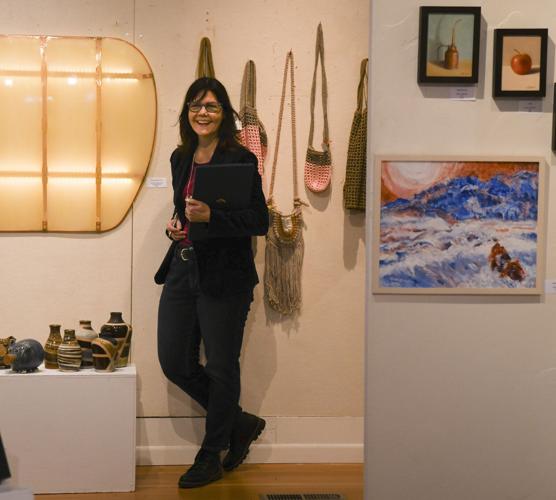
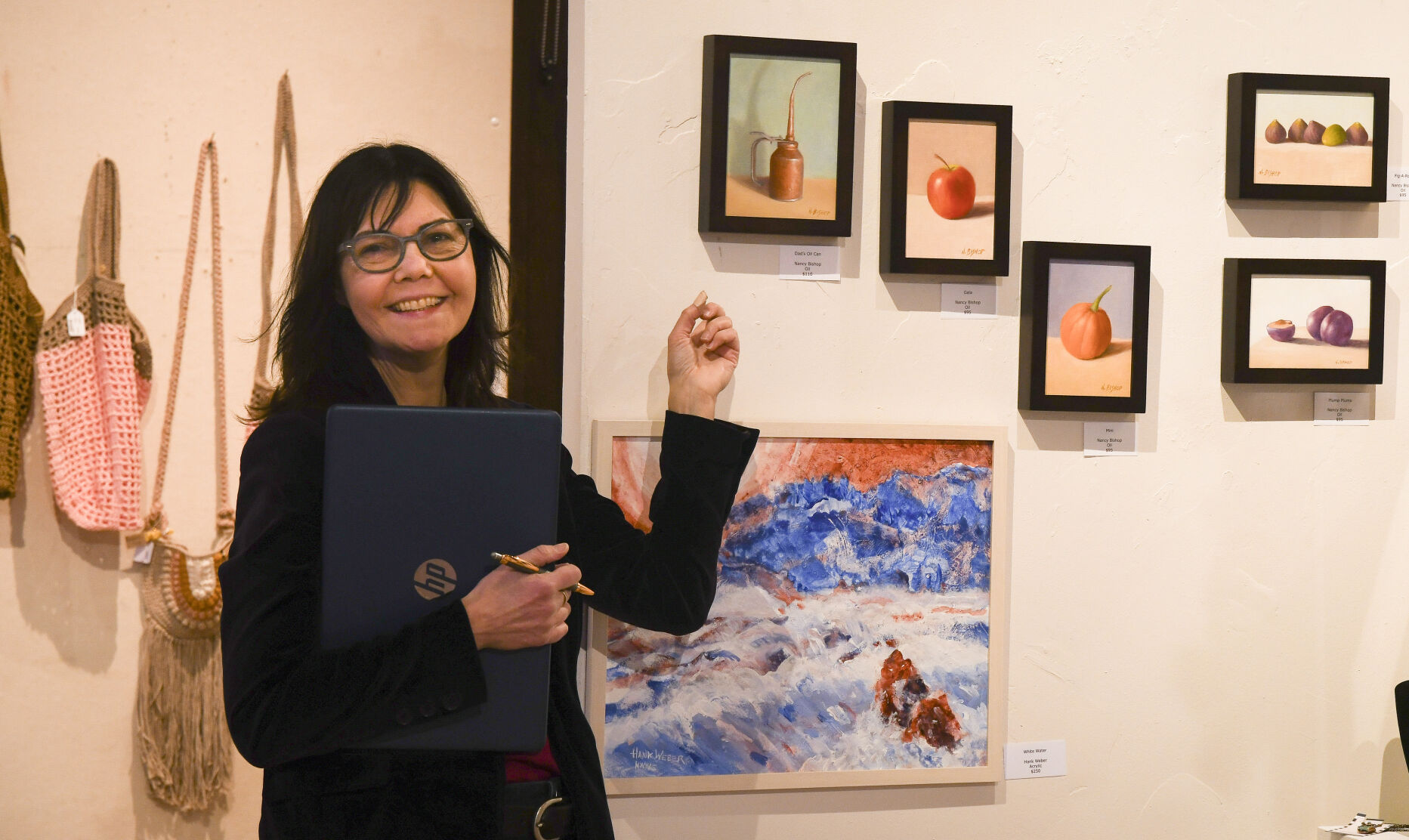
THE DALLES — Digging deep into how the nonprofit’s mission benefits artists and visitors in a lonely time, The Dalles Art Center’s new Director Sally Johnson looks forward to serving the community with the Center financially secure again.
“I like to say the best thing about me, is I have no history with what’s happened here, but it’s also my weakness,” Johnson remarked. “I don’t know everybody.” And she wishes to, having opted out of remote work in favor of community. Johnson, hired last June, moved to Oregon less than two years ago.
“From my background, I’ve helped other organizations think about their strategic positioning, why they exist ... Why is it important for this art center to exist? Because art is good,” she said simply. “It’s my responsibility to ask deeper questions about why. ... It’s a place where local artists can be a part of something.”
Connection through art, Johnson believes, is one solution to the “epidemic of loneliness” noted by U.S. Surgeon General Dr. Vivek Murthy in May.
“It’s really a global pandemic,” Johnson said, echoing COVID-19 language. The isolation now affecting more than half of Americans is deemed as dangerous as smoking daily, increasing the risk of premature death by as much as 60% for some.
Evidence of the gallery’s value is its stubborn persistence, growing from a late-1950s Art Association, “a group of people who were just dead set on learning ... how to be artists,” Johnson said. They gained the historical Carnegie Library, donated by the city. “That’s exciting to me. It’s the tenacity of our history here,” Johnson explained. “Up against all the things ... right now, an epidemic of loneliness, 24/7 news ... we share experiences of joy, loss, wonder, creativity.” Here, she watches people of widely different backgrounds and experiences connect through art.
All of which reduces stress-associated cortisol levels, Johnson said. “For kids, it helps them do better in academics, it reduces behavior issues, all these wonderful things,” she noted. “The desire to learn something is there, but also doing it with other people. Otherwise, we could all stay at home and watch YouTube and pretty much learn everything!”
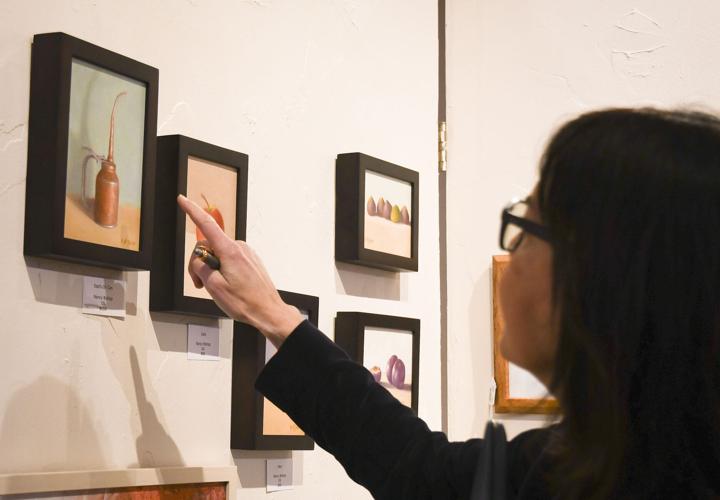
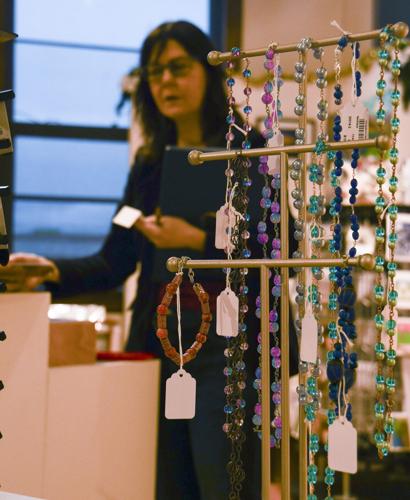
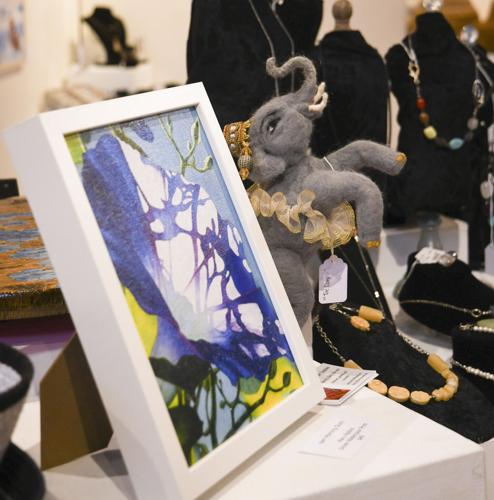
“Engaging with art can be making art, and it can be any form of that — it can be fine art to what people might call more craft,” she noted. The Center carries both. “The same benefits come from looking at art and talking about it.”
The Center also contributes to Gorge economy. Art provided Gorge residents with 88 jobs and a little over $4 million in income during the first half of 2023, according to a recent economic impact report from Americans for the Arts.
In her quest for stronger “why,” Johnson hosted volunteer discussions and a brainstorming gathering with 35 artists, engaging with other stakeholders, asking how the center can better serve community needs.
“There’s a whole discussion about how artists could better market their work, another discussion about mental health and art,” she said. “How art can serve to help people who are struggling.”
Going forward, Johnson hopes to create year-round educational programs, partnering with other nonprofits for more classrooms — the Art Center itself has “very limited” space.
“We are in this amazing community ... that has a wonderful school district, but has, like all school districts, funding issues. So, most of the arts programs have been cut from the elementary schools. And here’s this art center that ... we could be doing more,” she explained. “That’s part of our plan for the next three years.”
Johnson also hopes to engage with seniors. “Engaging with art for seniors, seven times higher cognitive function than adults who don’t,” she explained. “Based on the 2020 census data, there’s a good population of people who are 65 or older living here ... we can’t do it all, we want to partner with great people.”
She added, “All the data shows, having an art center is good for you.”
Johnson’s journey began with an undergraduate degree in painting and sculpture from Vermont’s Bennington College. She later went back to school for an MBA in sustainable business from Presidio Graduate School, now part of University of Redlands, Calif. She worked for various arts and culture organizations in Seattle, before a 15-year career at REI headquarters. Learning to build out departments and organizations became unwitting preparation for her current directorship. Mentors at REI still provide support.
Running the Art Center, Johnson, once a practicing artist and musician, draws from all her experience.
“We’re gonna go into 2024 in a really strong financial position,” she said, exciting for a nonprofit recently threatened with potential financial closure.
Oregon Arts Watch “shared with me that they had never seen so many arts organizations close in the state of Oregon,” Johnson recalled. “I think so many organizations struggled through the pandemic, and this place made it through.”
More than 60% of revenue comes from donor supporters. An estimate 12,000 volunteer hours and a couple of part-time employees have run the center for the five years. Johnson credits the committed volunteer board for the Center’s survival, too.
In a “pandemic of loneliness,” the Art Center brings people together. From five year’s records, Johnson estimates three or four hundred artists’ work is displayed each year. She knows of local art careers began in her showroom, boosted by an “unheard-off” 70% cut of prices for members.
Many customers are locals. But visitors are wandering in from farther afield — Vancouver, Spokane, Portland. Winter is “definitely more locals,” said Johnson, who hopes interested people support the center by dropping in, telling a friend, or attending an event.
The Center is ADA accessible, with a walker on hand in case of need. For more information, visit thedallesartcenter.org, or visit at 220 E. Fourth St.
Hours are 11 a.m. to 5 p.m., Thursday thru Sunday.


Commented
Sorry, there are no recent results for popular commented articles.