

NAMI Gorge is sponsoring four programs in September, which is National Suicide Prevention Month, to generate a community conversation about the issues tied to someone taking his or her own life.
Following is a brief description of the forums:
• Lorraine Carlstrom, a certified nutritional consultant, will present “How Nutrition Affects Mental Illness” at 5:30 p.m. Thursday, Sept. 6, at One Community Health, corner of 10th and Webber streets in The Dalles. Carlstrom is affiliated with the American Association of Nutritional Consultants and the Western A. Price Foundation, a nonprofit nutrition group. She has taught cooking classes based on nutrient-dense traditional foods and will have samples and brochures available, along with some book recommendations.
• YouthThink and NAMI (National Alliance on Mental Illness) are presenting the 90-minute feature film, “Suicide: The Ripple Effect” on Monday, Sept. 10, which is World Suicide Prevention Day. The showing will be 6 p.m. in the auditorium of The Dalles High School. Kevin Hines takes a journey to better understand the effect of his suicide attempt (over the Golden Gate Bridge) on his family, friends and first responders. Research has shown that for every death by suicide, over 115 people are directly affected. Hines also focuses on inspirational individuals, families and organizations that are using personal pain to help others find the hope they need to heal.
• A community-based presentation on “Talk Saves Lives: An Introduction to Suicide Prevention” takes place Thursday, Sept. 20, from 6 to 8 p.m. on the Hood River campus of Columbia Gorge Community College (first floor classroom). Attendees will learn the risk and warning signs of suicide and how together we can work to prevent it. A 17-minute documentary titled “It’s Real: College Students and Mental Health” will be shown that feature the stories of six students from across the country who successfully learned to manage their mental health. Participants will be taught to recognize the warning signs of suicide and how to seek help.
For more information call Susan Gabay, program coordinator, at 541-478-3576 or email Susanbgabay@gmail....
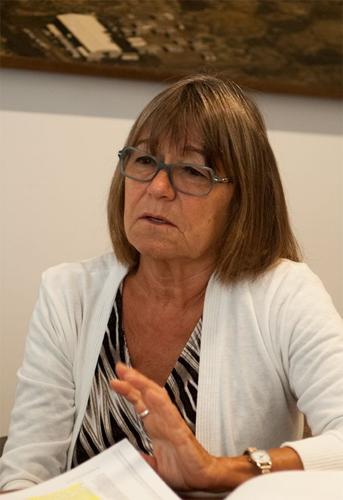
In a moment of crisis, a listening ear can stop a self-destructive impulse, says Susan Gabay, who works tirelessly to encourage a community dialogue about suicide prevention.
She said having people be unafraid to ask tough questions when someone is at risk, or check in with isolated neighbors, is more important than ever with suicide rates on the rise.
“It is essential to get everyone’s attention,” she said.
Since 1999, the overall suicide rate in the United States has gone up by 28 percent, and Gabay said that is a sign that societal changes are needed.
“People are afraid to get help because of the stigma around mental illnesses, like it is an uncommon condition,” she said. “The truth is that mental illness can happen to anybody regardless of age, culture, race, gender, ethnicity, economic status or location.”
The tragedy of suicide, said Gabay, is that the person experiencing a high level of despair and hopelessness might only be in that state temporarily. If he or she could encounter someone who helped them see hope for a better future, a life might be saved.
“There are things that anybody can do,” she said. “Most people don’t really want to die, and having someone step in at the right moment can make all the difference.”
September is National Suicide Prevention Awareness Month and, for the past several years, Gabay has been working with a committee of community members and mental health professionals to expand a public discussion about the uncomfortable topics of suicide and mental health.
“Suicide is the 10th leading cause of death in the U.S. and the eighth leading cause of death in Oregon — on average one person dies by suicide every 11 hours in this state,” she said. “We all need to learn to identify people at risk and not be afraid to reach out.”
A new study by the U.S Center for Disease Control and Prevention shows that deaths from drugs, alcohol and suicide now outpace diabetes.
Using data from 2016, the researchers showed that 29.1 people per 100,000 died from self-injury compared to 24.8 per 100,000 from diabetes.
The true number of deaths may be grossly underreported, the researchers said, as risk factors and reporting methods vary and are often difficult to determine.
The authors of the study are urging the public and health care providers to think about
The American Foundation for Suicide Prevention has released the following data about suicides, although it believes the numbers to be higher given that stigma leads to underreporting and data collection methods need improvement:
• Each year, 44,965 people die by suicide in the United States. For every suicide, there are 25 attempts.
• In 2016, the highest U.S. suicide rate (15.17 per 100,000) was among Whites (seven of 10 suicides) and the second highest (13.17) was among American Indians and Alaska Natives. Much lower and roughly similar rates were found among Asians and Pacific Islanders (6.62) and Blacks (6.03).
• Oregon ranks 16th in suicides and about 772 people take their life every year. More than six times as many people die by suicide in the state each year than by homicide.
• While suicide is the eighth leading cause of death in Oregon, it is the second among ages 15 to 23, the third for ages 35 to 22 and the fifth for ages 45 to 54.
• Suicide costs the U.S. $69 billion annually. The estimated yearly cost in Oregon is more than $740 million for medical and work loss costs, or an average of $1 million per suicide death.
• Firearms accounted for 51 percent of all suicide in 2016. The next most common methods were suffocation (including hangings) at 25.89 percent and poisoning at 14.90 percent.
• Men die by suicide 3.53 times more often than women.
• The rate of suicide is highest in middle age, white men in particular.
the different types of self-injuries as being related when it come to prevention efforts.
“We’re so entrenched in separating suicide from drug overdose or alcohol poisoning deaths that people can’t wrap their heads around the idea that they are related,” said Dr. Hilary Connery, co-author of the study. “It’s time to end the siloed approach to prevention.”
Gabay said the discussion about suicide is not complete without inclusion of mental illnesses and self-medicating behaviors that drive people to end their lives. For that reason, she also works during May — Mental Health Awareness Month — to focus attention on short- and long-term disorders.
“We need the Legislature to invest more in mental health services and research,” she said. “We’re dealing with suicide prevention as a crisis response when we need to get ahead of it.”
She is all about educating people to see the red flags when someone is in trouble.
“I see this month as the messaging around how to identify people at risk and understand we all have opportunities to reach out and make a difference,” she said.
On May 6, 2010, Gabay’s daughter, Susanne Blake Gabay, 21, took her own life following a severe depression that stemmed from a chemical imbalance.
After retiring in March 2017 from a 40-year career with the Department of Human Services, Gabay, who resides in Mosier, devoted her full-time attention to helping other families avoid the tragedy she survived.
She said people need to be bold in their discussion with someone who exhibits signs of emotional pain.
“Don’t beat around the bush, just ask, ‘Are you considering suicide?’”
Asking the question is not going to push someone over the edge, said Gabay; it could, in fact, start a life-saving conversation. People need to be nonjudgmental and supportive if the person says “Yes” to that question, she said.
“Listen to their reasons for being in distress and then help them focus on their reasons for living, without imposing your will on them,” said Gabay.
People who are at-risk for suicide can develop a safety plan, such as removing weapons and drugs from their home while in crisis, and designating a person to call when they feel low.
If a family member or friend believes the risk is high enough, Gabay said they can report concerns to the person’s health care provider, who can arrange for mental health treatment.
She is very supportive of the work being done locally by YouthThink and Blue Zones because they encourage social connections, developing a strong sense of purpose and building resiliency as part of a healthy lifestyle.
“Years ago, you knew who your neighbors were; you sat on the porch and got to know them,” she said. “But we’ve become so much more isolated as a society; we’re putting all our time into being successful.”
The problem with living that way, she said, is that anyone can have a series of setbacks that strip away material wealth. Having a strong support network in place will be vital to helping the person cope with unexpected and unwanted changes, said Gabay.
“In my perfect world, we’d all be checking in on each other,” she said. “It takes a village, all of us together.”
Gabay can be reached for more information at 541-478-3576.


Commented
Sorry, there are no recent results for popular commented articles.