
I grew up thinking of The Dalles Chronicle as “the paper.”
Some folks might have thought of that big brick of Portland newsprint as the paper, but not me. The Chronicle was a regular part of my life starting almost as soon as I could read.
Coming home from school every day, I started out on the funnies and the jumble, then the crossword, gradually started reading Elroy King’s humor columns, then began to learn about things like Vietnam and Watergate on the front page. It helped me write school reports, find out what movies were playing at The Granada, and find my first part-time gardening job when I was 13.
As a latchkey kid going home after junior high, Watergate was required after-school viewing (because that’s the only thing the stations showed), and I learned about the power of the press. I wanted to be part of that crusade for truth and justice.
In high school, I took The Dalles High’s journalism class, writing for The Tillicum. I got a job in The Chronicle’s circulation department, delivering papers to carriers. Sometimes I would help answer phones in the evening, sharing office space with Elroy, Austin Abrams and other folks from the bylines as they banged out the last few sentences of a story or an editorial on a manual Underwood or a Remington.
It was rarified air, if a little smoky.
At first, I imagined myself going on to become an investigative reporter with some big city paper. Instead, after much meandering, I landed at a tiny weekly in Portland and I learned the joys of community journalism: the Eagle Scout project, the school jump rope competition, the town meeting on water rates, the new restaurant on Main Street. They may not have been Vietnam, or Watergate, or the moon landing, but they were the thumping heart of the community.
More weeklies followed, including a stint as managing editor of The Dalles Weekly Reminder.
Then, in 1995, I came home to the paper.
Dailies are a different animal from weeklies. The rhythms are different, of course, and so are the demands. The Chronicle is the official newspaper of the county. It is also the longest serving newspaper, so people wanted our reporters on the scene. As a wire service member, we also contributed regularly to state and national news.
In many ways, the managing editor shapes the character of the paper. We oversee what goes into the news hole and write the editorials with varying degrees of autonomy. We prioritize what stories go above the fold — visible on the doorstep or the newsstand.
Working with Tom Stevenson, my first managing editor, the character of the paper was about telling the stories of the community. Decisions made on behalf of the public were important, but stories about the unique people who populate our area were the paper’s soul.
Later, working with Dan Spatz, the focus shifted a bit. People and stories were still important, but more emphasis was put on the role of the newspaper as the fourth estate — the government watchdog on the public’s behalf.
When my name went on the masthead as managing editor in 2006 (the first woman managing editor of The Chronicle, I might add), I had strong ideas about what my own sense of balance would be.
In my eyes, the paper should reflect the community it serves, it should urge the community to aspire to better things, and it should celebrate the people who are working toward those better things. The paper should pull back the veil on wrongdoing not only on the record page, but in government, too. And the paper’s editor should understand the distinction between actual bad behavior and simple political differences, and respond accordingly and proportionately.
That was the character I sought, but I think any managing editor would agree, hitting the mark is a daily challenge and not always achieved in the heat of deadline.
Three things are true for most community editors: never enough staff, never enough news space, and always more stories that we would like to tell than the other two allow.
We may be overworked and underpaid, but almost every managing editor I’ve known has a passionate desire to serve the community and hopefully leave it a bit better than they found it.
On rare occasions, on important issues, that meant stepping out from behind the presses and acting as an instigator. The first time I saw that happen was when Tom Stevenson called the community together for a town hall discussing the state of the old junior high school. Shortly thereafter, the campaign began to replace this old and dangerous building.
In my turn, I saw that opportunity in 2012, when many, many downtown storefronts were vacant and shopkeepers were struggling. The Chronicle and the The Dalles Chamber of Commerce teamed up on a town hall meeting to discuss that issue, which helped energize efforts around the fledgling The Dalles Main Street program.
Today, our downtown is much more vibrant, and I believe Main Street played a major role.
By the time I left The Chronicle, the landscape had started to shift. The information age and the 24-hour news cycle added urgency and fragmented the audience. Where newsrooms were often allowed to operate in a relatively separate world from the money-making side of the newspaper, the focus began to shift, and we had to pay more attention to the bottom line.
It started in the national outlets, those places where I had once imagined making my mark. The fight for audience pushed more newspapers to take an “if it bleeds it leads” approach, or to magnify issues of conflict, rather than give coverage in proportion to their relevance. It wasn’t long before the standing of the national news outlets began to slip. Like sharks sensing blood in the water, every crackpot pundit with a podium to pound was in a feeding frenzy over the mainstream media.
Sometimes that criticism is deserved, but more often it is a deflecting tactic used to draw attention away from bad public policy or used purely as propaganda to shake the public’s confidence in established institutions.
Community newspapers were insulated from this effect for quite a while. We are your neighbors and friends. We work alongside you to serve the needs of the community, after all. But as more people subscribed to news services tailored only to their own increasingly polarized viewpoints, we soon fell under scorn similar to the national outlets.
Be assured, we need our community newspapers. They are a marketplace not only of merchandise, but of ideas. They offer broad perspectives on the issues that matter most to each and every one of us — the ones that hit us closest to home. And in one portable package, they help us do our homework (be informed), find a good movie (be entertained), and find a job (be able to live).
As The Dalles Chronicle heads into its new, twice-weekly structure, I hope this new schedule will allow the paper to focus more of its resources on reporting the news than pasting it up.
And I hope this change will draw more attention to what we could lose, if we don’t fully appreciate its value.
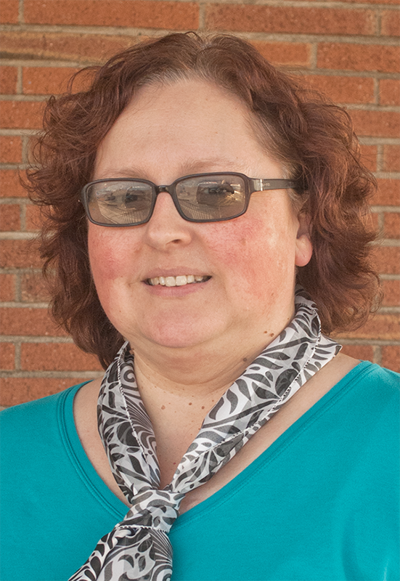
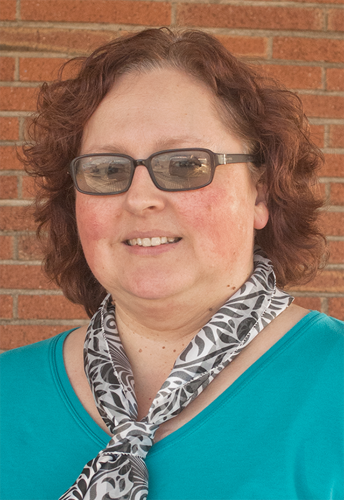
— Kathy Ursprung


Commented
Sorry, there are no recent results for popular commented articles.