
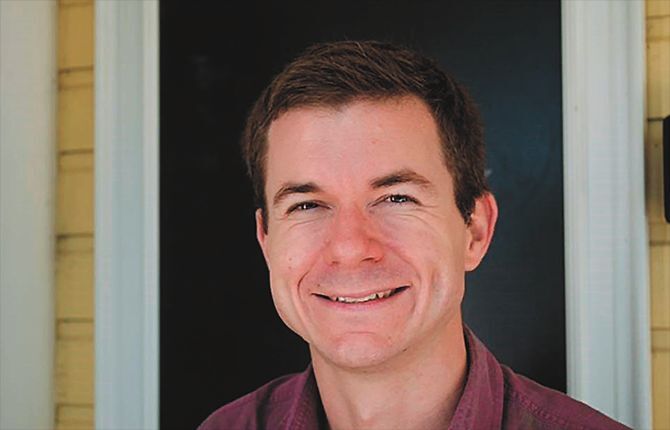
The Dalles native Luke Habberstad believes much of what happens in our lives is dictated by chance. And so it was that an eye-opening course he decided to take in his last semester of college propelled him on his eventual career path. Today, he’s an assistant professor of early Chinese studies at the University of Oregon.
Graduating from The Dalles High School in 1999, he headed for Yale. There, he changed direction a few times, casting about for a major.
He finally settled on history, having always felt its pull, but focused on other areas of the globe like Europe and South America. His senior thesis was on Mexican history.
But during spring semester of his senior year, he took a history class on the Silk Road.
That term itself is a misnomer, since there are actually many such roads, he said, exchanging not only goods, but people, ideas, and even religions between east and central Asia and the western Mediterranean.
Until then, his understanding of China, typical of most Americans, was that it was a closed-off society doing its own thing, and hostile to foreigners.
“But what was so interesting about the silk road course, for most of Chinese history the exact opposite was true,” Habberstad said.
He was fascinated to learn that China was influenced by all kinds of external cultural, economic and religious factors.
He was hooked.
Other things in the course also “sort of blew my mind,” he said. Things like the fact that “we have references to whole kingdoms that we know nothing about. We have a few sentences or something. I had never stopped to reflect how amazing that is.”
His specialty of early Chinese history has particularly sparse information to go on, which is all the more intriguing to Habberstad.
“I think that’s interesting, when you have to use a limited amount of evidence to construct the richest narrative or the most compelling argument just based on a small amount of material.”
Habberstad decided to head to China after college.
He got a year-long Yale fellowship in 2003, which was put on hold for a year because of the outbreak in China of a respiratory virus, SARS, which spread worldwide.
He went to Taiwan instead that fall, and the next year went to China for 18 months. He learned Mandarin, the national language of China.
Back stateside, Habberstad earned his master’s degree in Asian studies in 2007 and a doctoral degree in history in 2014, both from the University of California at Berkeley.
He didn’t always envision going that far academically. “I just realized I liked graduate study,” he said.
His dad, longtime local attorney Jim Habberstad, did actually envision ending up in the ivory tower. “I always knew he’d be a professor, he’s always been a studious kid.”
When his big sister Laura studied and worked in Japan while he was in high school, “I think that got his interest in Asia heightened quite a bit,” Jim Habberstad said.
Jim said it’s fun for him and his wife Dolores to tell people their son is a professor. “You bet. We’re way proud of him.”
Luke worked as a teaching assistant at Berkeley for a number of years before coming to Eugene two and a half years ago.
He loves being closer to family and he loves teaching.
He gushed about teachers he had growing up in The Dalles.
“I got a great education in The Dalles,” he said. “It was very wonderful and important formation for me. I owe Oregon a debt of gratitude so it’s really nice on some level to pay that back.”
Jim Habberstad said The Dalles High School AP teacher Tim Zenker was “a huge influence in Luke’s life” in terms of pushing him to seek an Ivy League education.
Jim Habberstad said Luke credited two teachers at St. Mary’s Academy also: Linda Smith and Sally Hill.
Luke is frustrated by how much education has been cut in Oregon, recounting how when he was in high school they were still teaching French and German.
He allows, however, that the problem is not specific to Oregon and that education cuts are a national trend.
Joining the Ivy League at Yale, Habberstad was well prepared academically. “Culturally, there was a period of adjustment,” he said. “I was just shocked that people were going to Yale with their high school friends. That just blew my mind. I was like, ‘What?’”
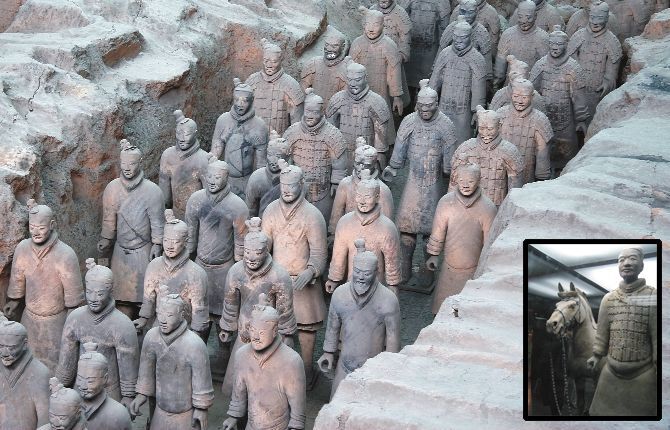
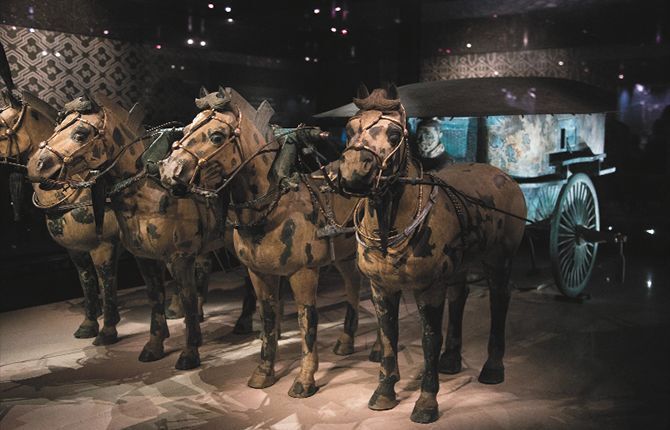
In the classroom, his area of expertise is early China, and the dividing line is 221 B.C., when Emperor Qin — famed for his terracotta army — created the first unified empire. Prior to that, there were warring kingdoms.
From Emperor Qin’s time up to just a century ago, even as China experienced many changes the basic imperial model never went away.
He studies the period that runs from the unification of the empire through the two or three centuries afterwards.
“I find it fascinating because you have this really important political change but associated with that political change are all sorts of other changes — in religion, in culture, in the economy,” he said.
“It really is this very important moment in Chinese history, when all of the patterns and ideas of imperial China are worked out for the first time.
“If you try to imagine, how do you set up an entirely new system of government and what are the implications for all different sectors of society?”
His doctoral dissertation focused on an interesting vocabulary change that happened during the Han Dynasty, which began in 206 BC. That dynasty was in power for several centuries, and “all these new words emerged basically to describe the institution of the government,” Habberstad said.
The one word he was particularly intrigued by is the Chinese word for “court.”
“That term in Chinese comes to refer to the empire as a whole. So in other words, the word han chao, which we would translate as Han court, actually, by the middle of the Han Dynasty, comes to refer to the entire Han Dynasty. It comes to mean everything, basically. I found that interesting because that’s not what the word court means in English.”
This enduring idea of the court coming to symbolize the entire realm continued until 1911, when the last imperial dynasty ended and China became a modern nation-state.
He’s extending his dissertation into a book, due to be published in a year.
While his own area of research is focused on just two or three centuries, his teaching is much broader. “If I were only teaching my research specialty, well, I’d be out of a job,” he joked. “You have to be able to teach more than your own research niche.”
While attendance in humanities courses is down nationwide, Habberstad said the study of China carries an importance in light of the significance of the U.S./China relationship.
Understanding China’s past is crucial to understanding how it acts today, he said.
Since becoming a nation-state in 1911, China has wrestled with making sense of its imperial past, he said. The debate centers around whether to reject or preserve it.
During the Cultural Revolution under Mao Tse Tung, everything from the past was rejected as feudal and superstitious, Habberstad said.
Millions and millions died during the Maoist period, from 1949 to his death in 1976.
The 1980s marked a resurgence and restoration of traditional Chinese culture, but it has seen bumps along the way.
His favorite example was the 2011 reopening of the remodeled National Museum of China, located on the famed Tiananmen Square in the center of Beijing.
At the front of the remodeled museum was a statue of Confucius, directly facing Mao’s mausoleum. Confucius was seen by Mao as everything feudal that needed to be rejected.
“And the idea of a statue of Confucius looking onto Tiananmen Square was apparently too much for some Chinese officials,” Habberstad said. A few weeks later, the statue was taken away in the middle of the night without any announcement.
Habberstad teaches in two departments: the East Asian languages and literatures department and the religious studies department.
He teaches a class on Chinese religion that covers the breadth of the region’s 5,000-year history. “That’s an exciting class. It’s overwhelming because there’s so much to cover. Obviously I can’t cover everything.”
It’s especially tough with the 10-week quarters at the U of O. He’s had students tell him he assigns too much reading.
“But I just don’t know if I’m going to budge on that point. I just feel, you know, there’s some important stuff for us to learn here and you need to just sit down and read it,” he said.
Sounding perhaps older than his 36 years, he continued, “You need to close your computer screens and turn off your phones and take some time to really absorb what you’re reading.”
He grants that technology has its benefits, but he fears it encourages people to move faster and faster. “I think there’s real value in slowing down from time to time and trying to read one thing. We should not be multitasking all the time, I actually think that’s not good for us.”
Since teachers had such a huge impact in his life, he said, “I try to keep that in mind when I’m teaching.”
Most students he never hears from again, but some reach out, and share a particular meaning they got from his course. Sometimes, it’s something “I totally did not think was the point of the course,” he said with a laugh, but he’s nonetheless glad they got something out of it.
And one thing that hasn’t happened yet since working in Eugene is seeing a fellow grad from The Dalles High School.
“Any The Dalles students heading to U of O, take my class,” he urged.
Coming to Eugene was a return in a way, since in his senior year of high school he went to state in track and got to run on the U of O’s Hayward Field. “And now I’m here as a professor on the same campus, so it’s kind of amazing.
“I feel very fortunate.”


Commented
Sorry, there are no recent results for popular commented articles.