In September we’ll see the return of Saturn to the evening sky, the harvest full Moon, some nice passes of the International Space Station, and the opposition of the planet Neptune.
Three things in particular interest me this August, those being a partial lunar eclipse, an excellent year for the Perseid meteor shower, and the return of Saturn to the evening sky.
Welcome to the first full month of summer, and the start of the second half of 2026. Warm summer nights make for excellent stargazing. Venus will again be the one bright planet that is easy to see in July.
June is here, with our longest days and shortest nights. At the start of June, sunset occurs at about 8:50 p.m. On the summer solstice, June 21, the sun will set at about 9 p.m. Sunset will remain at about 9 p.m. for the rest of June. Darkness will obviously come late — on June 21 it will not get completely dark until after 11:30 p.m.
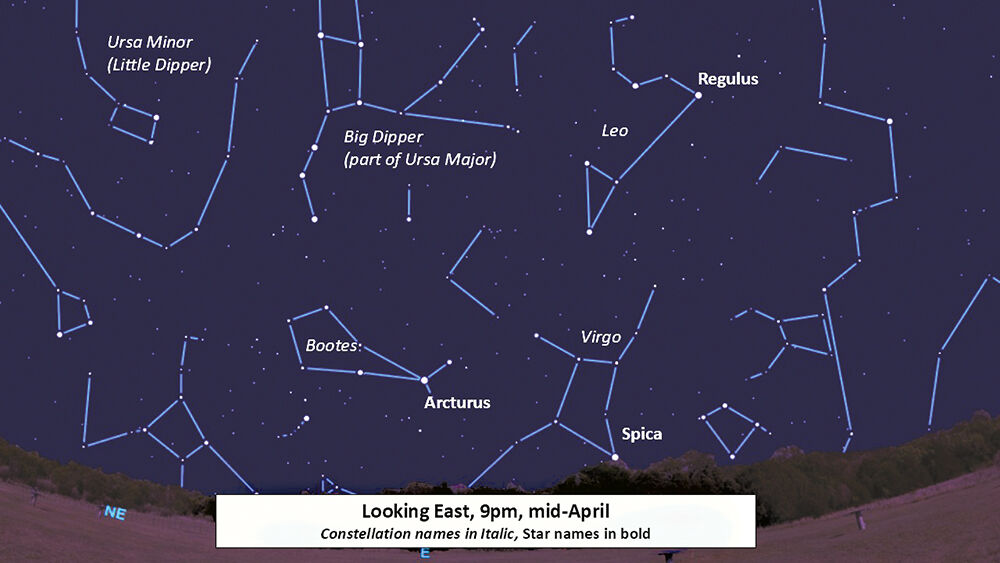
Welcome to April! If you were not able to view the March 3 Lunar eclipse, check it out on the Goldendale Observatory website, at www.goldendaleobservatory.com. Look under “special events” and you can watch a video of the entire eclipse, or a two-minute timelapse.
Our third month of the year brings us a total Lunar Eclipse, the vernal equinox, and a nice pairing of the Moon and Jupiter. Hopefully the clouds will part at the right time for viewing some of these events.
Welcome to May, our last full month of spring. Nights are getting shorter — by the end of the month, the sun will set just before 9 p.m., and full darkness will not happen until after 11 p.m. But even those twilight evening hours provide plenty to see.