

Featured
What happens after you take out a dam (Condit) that has been here for over 100 years? Do you restock with hatchery fish or let nature take her…
What happens after you take out a dam (Condit) that has been here for over 100 years? Do you restock with hatchery fish or let nature take her…
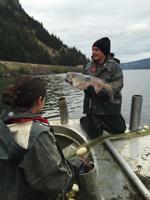
Fishers from the Nez Perce, Umatilla, Warm Springs, and Yakama tribes took to the Columbia River this week for the opening of the 2016 fall fishery, the largest tribal fishery of the year.
A flooding tide, calm ocean and lack of boat traffic made the sometimes rough water between the jetties seem mystically calm as our boat skimmed the salty surface heading west.

CLACKAMAS — Banner runs of Pacific salmon helped feed thousands of Oregonians in 2014. Oregon Department of Fish and Wildlife hatcheries donated more than 350,000 pounds of Chinook and coho salmon to food banks in communities across the state.
HOOD RIVER — Fisheries personnel have placed an underwater webcam in a salmon spawning pool of Eagle Creek, a tributary to the Columbia River west of Hood River, where Chinook and Coho gather prior to spawning.
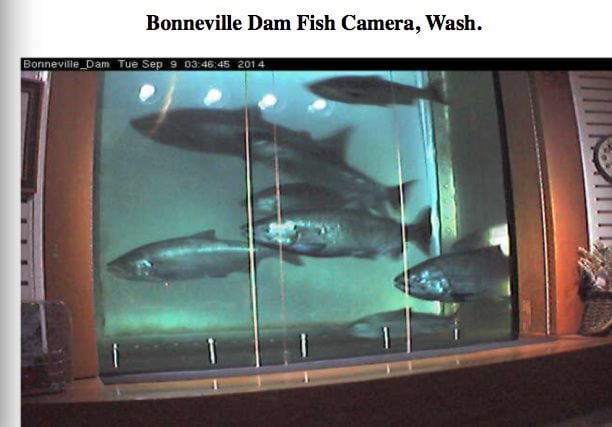
UPDATE: In what may be a record day, 67,024 adult Chinook and 5,447 jack crossed Bonneville Dam on Sunday, Sept. 7. Another record? 67521 kings thru Bonneville on Monday, according to NW Sportsman magazine.

September is harvest time for salmon and steelhead along the Mid-Columbia, and with huge numbers of Chinook, Coho and Steelhead migrating up the Columbia River past Hood River and The Dalles, now is your chance to capture one of these monster fish.

Fall Chinook returns are slowly beginning to grow, tribal fish sales are open.
When it comes to fishing the Pacific Northwest, Buzz Ramsey is something of a virtuoso, and even though his most recent edition of Outdoor News offers tips to maximizing fall-run salmon fishing success quite a ways downstream of Hood River, at the mouth of the Columbia, his column is relevant and extremely encouraging for the many Gorge-area fishermen and women who excitedly await the arrival of these great fish.
Off-channel habitat created in a river’s flood plain – sloughs, beaver ponds, wetlands and side channels – can play an important role in salmonid production.


