The following editorial was published in the Bend Bulletin, Oct. 11, regarding government efforts to control an invasive plant species:
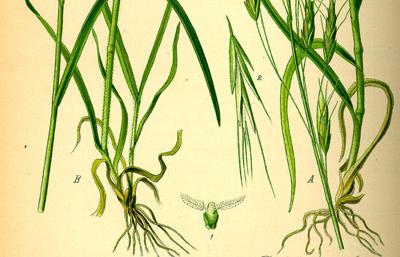
Cheatgrass has been called the invader that won the West, and that’s not far off the mark. The annual grass covers nearly 12 million acres in Oregon alone, and can be found across the western United States and Canada, and as far north as Alaska.
That causes problems.
Cheat, an invasive plant that most likely arrived here from Asia via Europe, chokes out native plants.
It blooms and dies early, leaving in its wake a tangled mat that makes range fires in these parts far worse than they otherwise would be. In a time of drought, that’s especially troublesome. Moreover, after it’s fueled a fire it chokes out native plants trying to re-establish themselves.
Its effects don’t stop there. Any desert hiker can tell you what it’s like to come home with socks full of cheatgrass, just as many dog owners have tales of trips to the veterinarian to have cheat removed from ears and noses. Cattle and horses, too, have problems with cheatgrass.
Now comes word that a scientist with the Agricultural Research Service of the U.S. Department of Agriculture may have found a way to finally begin to bring cheatgrass under control.
Ann Kennedy, a soil scientist, has teamed up with students from Washington State University and tested some 25,000 bacteria taken from nearby fields. Her goal was to find those that hinder the growth of cheat but do not hurt the growth of wheat.
She’s done just that. In fact, her bacteria not only reduced the amount of cheatgrass by half with a single application, they’re also useful against two other invasive plants, medusahead and jointed goatgrass. At least one of her bacteria strains is likely to be ready for commercial sale in fall 2016.
Kennedy’s bacteria won’t be the sole answer to the West’s cheatgrass infestation, of course — with something like 100 million acres of cheat infestation in the West, nothing is — but it’s a big step in the right direction.
That’s good for the High Desert, good for sage grouse, good for all sorts of things.
(Editor’s note: The Chronicle publishes a variety of editorial viewpoints from different newspapers on Thursdays).



Commented
Sorry, there are no recent results for popular commented articles.