As a result of numerous childhood ear infections, I never enjoyed great hearing, and as I grew older my hearing continued to slowly decline. In my late 50s, my hearing impairment was significantly interfering with my ability to do my job, which involved frequent communication both in group settings and individually. I was fortunate to have the resources to cover the costs of hearing aids, diagnostic tests and rehabilitative services, which allowed me to hear well enough to continue to work and enjoy family and friends for several more years.
Columnist Colin Wood at his home in Odell.
Amancay Blank photo
But my increasing deafness, even with the hearing aids, still interfered with work, family, and social activities. At age 67, I had hoped to work a few more years. However, I realized I wasn’t able to hear well enough to adequately participate in the activities and responsibilities of my job, and sadly I decided to retire later that year.
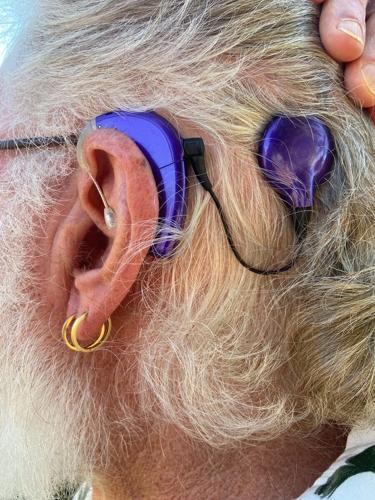
Three years later, as my hearing continued to decline, my audiologist urged me to get an evaluation for a cochlear implant, a device implanted into the inner ear to stimulate the auditory nerve. In June 2017, after two more years of evaluations, documentation, and insurance haggling, my left ear was surgically fitted a cochlear implant. This made a huge improvement in my hearing. I continued to wear a hearing aid in my right ear until the hearing loss in that ear warranted a second cochlear implant in November 2021. Now I am a “Bionic Man” and hearing better again.
My research indicates fewer than 20 % of people in the U.S. who could benefit from hearing aids have them. Approximately one-third of people between 65-74, and two-thirds over age 70, suffer from hearing loss, a leading risk factor contributing to the onset of dementia. Financial barriers prevent most people from obtaining hearing aids, which can cost $5,000 or more. Many seniors don’t have access to hearing aids or the audiological support services needed to ensure that they can obtain or fully benefit from the devices. Hearing aids and related hearing care costs are all frequently excluded from Medicare and most other insurance coverage.
Deafness, whether mild, moderate, or profound, makes it difficult to talk with others, to be social, to communicate on the phone or to order food in a restaurant. It complicates noisy family gatherings, special occasions, and anytime when friends or relatives are trying to visit. Losing the ability to hear and understand things clearly and not being able to understand or keep up with the discussion can lead to speaking when others are talking or saying things that don’t relate to the conversation — causing one to feel disoriented and separate, embarrassed, and inadequate.
Columnist Colin Wood's cochlear implant apparatus.
Amancay Blank photo
Loss of hearing can have a dramatic impact on the way we interact with others and experience life. Seniors who struggle to hear every day are nearly 47% more likely to have depression. We might get mentally exhausted and withdraw mentally and/or physically. We might start skipping birthday parties, family dinners, holiday and other festive gatherings. Seniors may see ourselves as outsiders in our own families and friendship groups. Hearing loss can cause cognitive decline, including difficulty thinking or concentrating, and even lead to dementia. It can affect balance, cause us to avoid physical activity, and adversely affect job performance.
On average, people with hearing loss wait 7-10 years before getting help for their deafness. Discounting and minimizing your deafness can make your situation worse and more difficult to treat. If you have the financial resources, I urge you to have an audiological evaluation and get hearing aids if you need them. Learning to use them effectively does take a little time and practice, but the benefits are definitely worth it.
Ideas for your family and friends to support you in living with hearing loss if you don’t want or can’t afford hearing aids include:
• Tell your friends and family about your hearing loss.
• Ask them to face you when you are talking with them.
• Ask them to speak more clearly and a little louder, but not shout.
• Reduce surrounding noise in the room when talking. Turn off radios, TV, and music.
• Try to sit in the quietest areas of restaurants and rooms while talking.
• Pay attention to sitting in the middle of conversation groups and not on the edge.




Commented