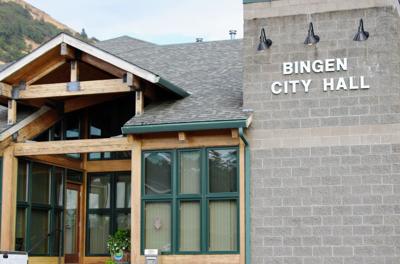
BINGEN — The Bingen City Council met on Feb. 3 at city hall, and the first action item was awarding the East Steuben Waterline Sections 2-3 contract. Ten companies placed a bid to handle the replacement, and after coming in at $211,920, Crestline Construction won.
The city is required by state law to award the lowest bidder, and it was unanimously approved.
A second project was also awarded: the RRFB contract, for $193,380, to Grade Werks. The RRFB, according to City Administrator Krista Loney, is a rectangular reflective flashing beacon that alerts drivers to a pedestrian crossing.
Klickitat County Commissioner Todd Andrews then joined the council meeting for a presentation on Adult Probation Services. He introduced Director Courtney Cooke, who has worked in the program for 20 years.
As with jail costs, adult probation services costs have increased massively due to inflation. The loss of landfill funds has also left the county needing to tap other sources. Cooke gave an overview of the seemingly robust, personalized services that she and her staff provide. Bingen must pay for its share of services used based on an average of the past three years. The council unanimously agreed to contribute its share, which is $15,228 for 2026.
Dylan Ohnemus then faced the council on behalf of the Gorge Heritage Museum Board, which is seeking a three-year lease renewal. Everyone, including Ohnemus, shared concerns about ADA accessibility. Loney suggested that the council make an in-person site visit before making a decision about the building’s future, and all agreed.
The Energy Facility Site Evaluation Council also notified the city that a private company, Cascade Renewable Transmission, LLC, has applied for a permit to install a high voltage electricity transmission facility in the bed of the Columbia River near Bingen. The evaluation council invited the city to provide one councilor to represent Bingen, and Councilor Eric Shroder volunteered.
Next up was a discussion about the city’s online utility bill pay service. Currently, the city pays XpressBillPay $1,128 per year in order to provide the option to pay online, but only 21 residents utilize it. This means that Bingen is paying around $65 per customer to provide this service. Loney suggested that this was an inefficient use of the city’s funds, and the council agreed.
Current users will receive 30 day’s notice that this option is being phased out. Utility customers can still pay with cash, check, debit or credit card, or they can get set up on autopay through the city at no fee.
The Bingen City Council’s next meeting is set for Tuesday, Feb. 17 at 6 p.m.



Commented
Sorry, there are no recent results for popular commented articles.