

You know the feeling – the itchy eye that is just begging to be scratched.
Before you start rubbing your eyes, you may want to think twice about the potential consequences.
While eye rubbing may seem harmless, people who rub their eyes are at risk of infections or damage to their cornea.
Fortunately, there are a number of common causes of itchy eyes that can be treated to reduce the urge to rub.
Itchy and irritated eyes are some of the most common reasons that patients visit eye doctors. We have experience in treating the causes of eye rubbing and the consequences, which can require specialized contact lenses or corneal transplantation.
Causes of eye rubbing
Rubbing your eyes is often a reaction that occurs when your eyes feel uncomfortable or itchy.
The most common reason for that itchy sensation is allergic conjunctivitis, which accounts for nearly 50% of itching cases. Allergic conjunctivitis is an inflammatory reaction of the conjunctiva, the clear skin on the surface of the eye. Allergens bind to the surface of cells, ultimately leading to the release of inflammatory chemical molecules that trigger the sensation of itching. People may experience redness, swelling and little bumps on the inside of the eyelids.
Sometimes the urge to rub happens if there is a gritty sensation, dryness or something stuck in our eyes. This is often a symptom of dry eye syndrome, or blepharitis.
The urge to rub the eyes can also occur because the eyelids feel itchy, often from other conditions such as dermatitis, which is an inflammation of the eyelid skin.
Because of the anatomy of the eyelid and the thin outer layer, called the epidermis, it is more vulnerable to irritation from the environment or from contact lenses.
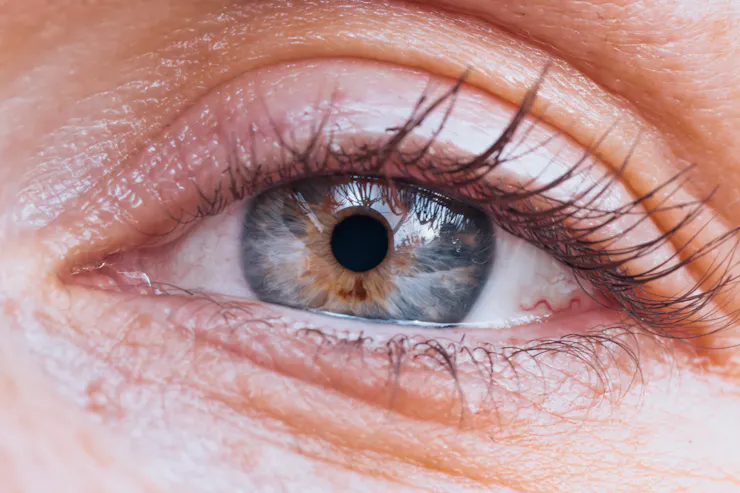
Eye rubbing is a risk factor for corneal disease
The most serious risk that has been associated with eye rubbing is the development of keratoconus, a condition in which the cornea – the clear window in the front of the eye – becomes progressively thinner and more irregular in shape.
While healthy corneas have a more spherical shape, those with keratoconus become steeper and cone-shaped. Keratoconus often causes high degrees of irregular astigmatism, which is an imperfection in the curvature of the cornea that leads to blurry vision.
Fortunately, keratoconus can now be treated with a procedure called corneal cross-linking, which can halt further progression in many cases. During this procedure, collagen strands are cross-linked together, strengthening the cornea. Many patients with keratoconus need specialized contact lenses to achieve optimal vision, even after treatment.
In the most advanced cases, patients may need corneal transplantation to remove the damaged corneal tissue and replace it with healthy donor tissue.
Other conditions associated with eye rubbing
A corneal abrasion is a scratch in the thin, clear skin that covers the cornea and can be triggered by aggressive eye rubbing or a fingernail that inadvertently touches the cornea. An abrasion is exquisitely painful and usually causes blurry vision. Corneal abrasions require treatment with antibiotics to prevent infection.
Eye rubbing can also cause a subconjunctival hemorrhage. This occurs when rubbing breaks a small blood vessel on the surface of the eye and makes the eye appear very red. While it can look and feel alarming, a conjunctival hemorrhage is essentially a bruise on the surface of the eye and does not cause lasting damage. This condition typically resolves in one to two weeks without any intervention.
Conjunctivitis, commonly known as pink eye, is an infection of the conjunctiva that can be spread by eye rubbing. It can be caused by viruses or bacteria. If you must touch your eyes, washing your hands first is a good practice to prevent the spread of infection. Viral forms of conjunctivitis are highly contagious, so you should be particularly careful about rubbing your eyes if you have had contact with someone with pink eye.

Treatments for itchy eyes
Most people rub their eyes without even realizing it. But there are ways to address underlying conditions that might trigger eye rubbing.
Often, over-the-counter treatments and home remedies can be quite helpful. One treatment that helps address most underlying causes of the urge to itch is to use artificial tears. Pro-tip: Cooling them in the refrigerator helps too!
In cases of allergic conjunctivitis, it’s important to try to avoid the allergen that triggers the symptoms. For example, if allergies are due to pollen, staying indoors, using sunglasses or rinsing off your face after exposure can help decrease allergen load around your eyes.
The next option is to try over-the-counter artificial tears to rinse out the allergens. In general, it’s best to avoid the drops that advertise “get the red out,” which provide temporary relief but carry risks of side effects. Cool compresses can also provide some relief from itching, decreasing the urge to rub your eyes.
If you still find no relief from the itch, the next step would be to try allergy eye drops, which are available with or without a prescription. There are topical treatments that are antihistamines, mast cell stabilizers or a combination of both. Antihistamine eye drops help block the release of histamines, a substance that the body releases after exposure to allergens. Mast cell stabilizers block the breakdown of mast cells – part of the body’s immune system – which helps reduce the release inflammatory chemicals. Combination eye drops help by targeting both mechanisms.
Since there are many options available, it’s helpful to discuss with your eye doctor which one is the best for you. In cases where there are other symptoms of allergies, such as sneezing or a runny nose, an oral allergy medication could be effective for treating all these symptoms. If you have persistent symptoms, a prescription steroid eye drop can be helpful.
If the urge to rub your eyes is not improving with artificial tears, cool compresses or over-the-counter allergy eye drops, it’s time to schedule an appointment with your eye doctor for an evaluation.
This article is republished from The Conversation, a nonprofit, independent news organization bringing you facts and trustworthy analysis to help you make sense of our complex world. It was written by: Taylor Starnes, University of Illinois Chicago and Neelam Patadia, University of Illinois Chicago
Read more:
- Bacteria live on our eyeballs – and understanding their role could help treat common eye diseases
- Eye exercises to improve sight – is there any science behind them? An ophthalmologist explains why you shouldn’t buy the hype
- Total solar eclipses, while stunning, can damage your eyes if viewed without the right protection
The authors do not work for, consult, own shares in or receive funding from any company or organization that would benefit from this article, and have disclosed no relevant affiliations beyond their academic appointment.


Commented