
The City of Mosier has secured a $750,000 grant from the Oregon Parks and Recreation Department (OPRD) to construct a plaza, public restrooms and a "bike hub."
Mayor Arlene Burns said the city had “hunkered down” and worked on funding applications for months for projects including the plaza, electric vehicle (EV) charging stations and an adjacent multipurpose building called "Mosier Center."
The plaza and bike hub will provide a permanent home for Mosier Farmer's Market, picnic areas and a native plant garden, City Manager Colleen Coleman said in a press release.
The ideas for these projects have been around for years, she said, and the pandemic has, “in an ironic way,” put the city in a mode of “let’s hunker down and let’s try to get ahead of things.”
Burns regularly drove five hours round-trip to Salem for committee meetings before the pandemic. She said keeping meetings timely and “as fun as possible” has led to productive and engaged virtual meetings.
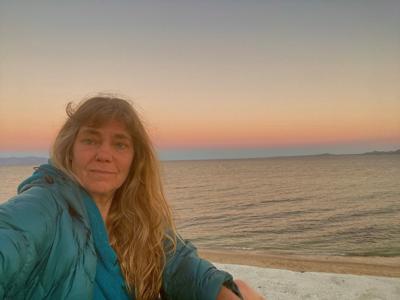
“I feel like it’s really been proof of concept that we’ve been able to keep the ball moving and stay engaged on a local level and on a regional and state level in a lot of capacities,” she said. “I’m in Baja right now, and I don’t think I’m forsaking my city by being here. It’s just this new, different way.”
Burns said the city’s projects have made "lemonade from the lemons" they were given in 2016 when a Union Pacific oil train derailed and caught fire in the town. She said Mosier is trying to demonstrate a “different way of doing business” for small, rural cities.
The “fabric of the city,” she said, includes a focus on positive vision and not getting caught up in minute or trivial details or debates.
“For example, with Union Pacific, we did a year-and-a-half of non-litigious negotiation with the railroad and came up with a settlement that everybody was happy with.
“We had lawyers on both sides that dotted the ‘I’s and crossed the ‘T’s, but we weren’t fighting with them. We weren’t in some legal court battle and it’s a very different way,” Burns said. “Because of that we are in a cooperative relationship with the representatives of the railroad.”
Burns said she has told herself she will be done as Mosier Mayor — an office she has held since 2014 — when Mosier Center opens. She said the planned multipurpose building is the city’s “next big thing.”
Plans for Mosier Center, include a firehouse, offices for city government and a community center. The building would be adjacent to the plaza and bike hub on land the city received as part of its settlement with Union Pacific.
The building will cost around $5 million total, Burns said. She said the facility will utilize solar panels, energy efficient design and materials to be “Net Zero” certified, meaning it will not use more energy than it generates throughout the year.
“We don’t have all the funding for it, but it’s looking like the momentum is there and we’re pretty sure we’ll be able to get it.”
Locating these projects together on the former railroad land allows multiple projects to share infrastructure like parking. The building will be adjacent to the bike hub, plaza and high-speed EV charging stations funded by a $250,000 Pacific Power grant, Burns said.
“Often, it’s like ‘the building will have a parking lot and this and that.’ To have a million dollars for the area surrounding it to bring it all up to speed — and it’s all kind of happening at once — is really exciting,” she said.
Burns said environmentally conscious projects can be economically sound as higher initial investments are paid off by lower operating costs over time.
“We’re using state-of-the-art systems that will be so energy efficient that instead of having an electric bill that’s $1,500-a-month, it will be nothing and that will be forever,” she said.
In the same vein, the city is planning to replace a sewage outflow pipe that was damaged by the 2016 derailment with “wetlands estuary treatment,” Burns said. No sewage, treated or otherwise, would be directly discharged into the Columbia at all, she said.
Because of code changes, the outflow pipe would need to be extended 100 feet farther into the river, Burns said. Bringing the pipe up to code would be a “massively expensive” project to “still have sewage dumping out where everybody’s playing in the water.”
Burns said the Oregon Department of Environmental Quality has been excited about the project. She said this is another example of “how you can get so much more business done if you have respectful, good relationships with state agencies.”
The city’s two full-time employees have joined volunteers on the council and part-time consultants to form an engaged team that Burns said reflects the city’s motto of “Small Enough to Make a Difference.”
“I think I’m in this creative, problem-solving mode and the council has been behind me on this,” Burns said. “We have a staff right now that works together really well and the consultants that are on board and … I feel like we sort of have a dream team right now.
“We’ve got our ducks in a row and we’re getting to be a little bit ahead of our own game enough that we’re not in a survival mode. We’re able to be proactive, and a step ahead, to try to be an example,” Burns said.
Mosier may be the smallest city to have committed the Paris Climate Agreement by signing the Chicago Charter, Burns said, but its size allows it to follow through on the agreement’s goals.
“If Chicago or Los Angeles can make a commitment of that kind of level, how could it be possible that it’s not easier for Mosier to make that commitment?” Burns said. “I think it’s a good place, in a rural area, for us to go ‘OK, we can make those decisions to honor our surroundings.”
Burns said people see a “jewel of a place to live” like the Gorge and “start wanting to devour the jewel.” She said Mosier has found a balance between use and conservation.


Commented
Sorry, there are no recent results for popular commented articles.