While working on the history of the fruit industry for the Odell mural, I came across multiple sources of information about the history of various immigrants to our valley. While the Japanese side of the Yasui family has been pretty thoroughly documented, I have been negligent in digging deeper into my father’s Finnish roots. Like every generation, you build on the research of those who have come before you. I appreciate the extensive work of our cousin Raija Huusari, who researched the branch of her family who stayed in Finland rather than immigrating to the United States in the late 1800s.
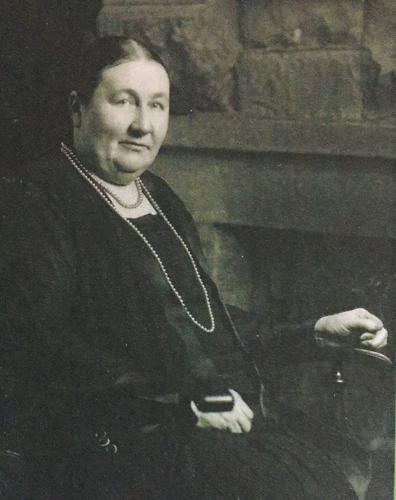
Raija wrote a book detailing the genealogy of the Finnish family branch, although it is not completely clear to me, since most of it is written in Finnish, a language my father refused to pass on to us when we were children. Not only is the language difficult to read, write or comprehend, a person’s surname may change repeatedly during their lifetime, for it follows the home or village in which they reside. As an example, my father’s grandparents, Maria Greus and Johan Jacob Jacobsson, first married home was in the Jokela house in Alaviirre village in Lohtaja; thus their name is given as Jokela. In 1860, they moved to Himanka to the Ahlholm house and, according to church records, took the last name of Ahlholm. They moved back to the Jokela home a year later, then to the Sambila house in Kannus, with surnames changing accordingly. In 1874, they moved to the home in which they lived until emigrating to the United States, the Annala house in the Ylikannus village. Of their seven children, only three survived, all now carrying the Annala name; Jacob, Johan and Zacharias.
Confound these surname changes with the tradition of naming your children after their ancestors or siblings, changes made to the Finnish names by those entering the immigrants’ name into the record book at Ellis Island, and the natural tendency to “Americanize” your name when settling in a new country for easier pronunciation. Johan became John and Greus became Kreus because of differences in the Finnish and English language. So try to follow this across the generations ... John Jacob Annala cousin later to become wife Selma Sophia Seppa beget Jacob John Annala, who beget Sulo Annala who beget John Jacob Annala.
My sister Selma was named after her grandmother and I am named after my great-grandmother, Maria, with the Finnish nickname Maija, which is Finnish for Mary or Maria.
Perhaps this convoluted tree of family names has been why I haven’t wholeheartedly jumped into the Annala genealogy. No wonder I was confused by the number of cousins, uncles, grandfathers and brothers named John. Add to that the sheer size of the three Annala families of Jacob, John and Zach that homesteaded in the Oak Grove area of Hood River Valley.
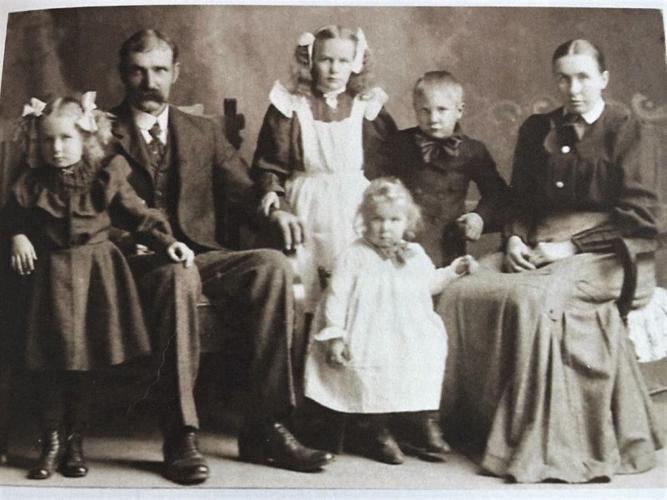
The Jacob Annala and Selma Sophia Seppa family had eight children, Elma Maria, Alvah Jacob, Evi Sophia, Sulo Edwin, Arne William, Vienna Esther, Wilma Ruth and Ellen Violet.
The John Jacob Annala and Elizabeth Lepisto family had fifteen children and Zachary and Hilma Frederika Jampsa had nine children.
One must understand a little about the history of Finland, its economic and political makeup to better understand why many left their homeland and made the dangerous journey across the Pacific Ocean. This is what our cousin Raija shared about the Finland our family fled from in the late 1880s. Interestingly, it parallels the reasons Japanese immigrated to the United States in the same time period, as well as eastern and western Europeans.
The Finnish came to escape oppression and ultimately war with Russia, poverty and famine. Although there is documentation of the Finnish settling the Delaware Valley as early as 1638, the turn of the century migration began when Norwegians imported them as laborers to work in the copper mines of Minnesota. They came to seek a better way of life in a time of great poverty and famine swept this Scandinavian country.
While there were not as many Finns moving to the United States as there were from their neighboring countries of Sweden and Norway, the sparsely populated country of Finland suffered when almost 10 percent of its population immigrated at the beginning of the 20th century. By 1920, about 200,000 Finns fled their homeland. Because the Finnish language is long and difficult to speak and learn, they faced increased discrimination in the United States, much like those of Japanese or Chinese ethnicity. Unlike their Asian counterparts, their physical characteristics of light-colored skin and hair helped them blend in, making them a less visible target of discrimination. And like immigrants from other countries, the Finnish settled in small communities where their language was spoken and cultural activities and traditional celebrations were practiced.
So the family story of settling in America begins. I am not looking for relatives or ancestors; I will be exploring the stories behind our Finnish families, what caused them to immigrate from Finland to the United States and ultimately settle and grow their families in the heart of the Hood River Valley. I will be doing some of the research online, through family photos and documents as well as asking the Hood River museum research team for assistance.
At the age of 20, my grandfather, Jacob Annala, came to the United States in 1879 to avoid conscription into the Russian Army. He worked in the iron, gold and copper mines in Ironwood, Mich. In a year, he sent money for his brother Johan (John) to come and work. And by 1882, they earned enough money to send for their father Jacob, mother Maria and brother Zacharias. The Annala family settled in the small township of Savo near Frederick, S.D. There were moves to nearby Finnish settlements in Frederick, Brockett and Lakota, S.D. The names on the Savo and Frederick townships are linked to the Hood River Valley including Annala, Hukari and Jakku.
From there, the move was to our own Hood River Valley.



Commented
Sorry, there are no recent results for popular commented articles.