
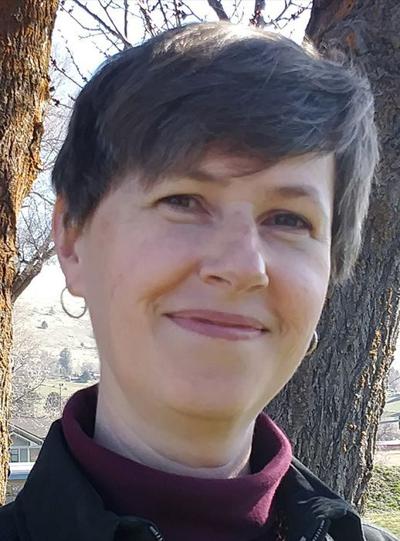
Her campaign motto is “Moral Courage + Rural Dignity,” and Raz Mason is excited to be one of seven Democrats trying to unseat U.S. Rep. Greg Walden, a Republican.
“I woke up early one January morning, and I thought, ‘I have to do this, I’ve got something to say,’” she said. “We need fewer walls and more bridges. We have nothing to lose; we can try it another way.”
She resides in The Dalles and works as a part-time English teacher in Hood River. She has also taught science classes at local schools.
Mason, 48, has never served in an elected office, which she sees as a plus since she will enter the Second Congressional District office with an open heart.
“My background is incredibly varied and centered around service and helping in stressful situations,” she said.
She believes that if people are lifelong learners, they continue to grow as human beings, and that makes them more open to look at issues from differing viewpoints.
She believes part of the problems in society, such as the urban/rural divide, come from people not expanding their knowledge base.
“A lot of people in rural America feel put down by people in cities, and I agree. It’s easy for Portland (largest pool of voters) to say they know what’s best for everyone but, if they have food on their table, it’s because people in rural areas put it there,” said Mason.
She continually challenges herself to see things from the perspective of others and has trained in that skillset with a master’s in Pastoral Studies from Seattle University and a Master of Divinity from Harvard Divinity School, which she attended on a scholarship.
She holds a bachelor’s degree from Bryn Mawr College in Pennsylvania with a major in math and a minor in political science. She earned her initial teacher credentials in social studies.
Her resume includes two stints as a long-haul truck driver, which allowed her to gain a better understanding of rural America, plus 18 months of training as a chaplain at veterans’ hospitals.
While at Seattle University, she was embedded for seven months with the Army ROTC (Reserve Officers’ Training Course) students and participated in training.
“I saw the connection between hard work and service,” she said. “There are things the military is doing that the Ivy League can learn from and respect, and there are things the military can learn.”
She used that experience to design and organize a national conference at Harvard that brought the two sides together.
One of the biggest lessons she learned from soldiers was: “The worst day out here [civilian life] is going to be better than a cold rainy day in the field.”
Starting after high school, she worked at two domestic violence shelters in Portland and Seattle in her quest to “understand how the bad stuff happens and how we can help it not happen.”
Mason got into this field by volunteering on a crisis hot line and, on numerous occasions, transported abused women to shelters. Volunteers asked for police escorts on dangerous calls.
“My heart was beating so fast when that happened, and that’s what the police face every shift,” she said of the deep respect she felt for law enforcement.
Mason is excited about not only having Democrats in the race but one independent and two Republicans challenging Walden, who lives in Hood River and has held his seat since 1998.
“I think having so many people running made it easier for me to say I’m joining this conversation,” she said.
Joining Mason on the Democratic ticket in the May 15 primary election are: Dr. Jenni Neahring of Bend; Jim Crary of Ashland, the 2016 nominee; Eric Burnette of Hood River; Michael Byrne of Hood River; Jamie McLeod-Skinner of Terrebonne; and Tim White of Bend.
Walden has won all 10 of his general election races for Congress by at least 61 percent and reportedly has more than $3 million in his war chest for the 2018 election. In 2016, he won all 20 counties in his district, which is about 70,000 square miles that encompasses Eastern Oregon and most of the central and southern parts of the state.
Mason is undaunted by the odds against her. She believes Americans are dissatisfied with the workings of Congress enough to seek real change.
“As a teacher, I learn something new every day and, in Congress, I would do the same,” she said.
She doesn’t “vilify” her rivals, Walden or President Donald Trump in her campaign, something she sees as counterproductive.
Just by running, Mason is contributing to a dialogue so that people can reach beyond barriers to connect with each other. She has been in six candidate forums so far, with another planned for The Dalles on April 21 at the high school.
She’s deeply interested in security studies and sees real risks in the world. But national prosperity also contributes to our security, she said.
“Ultimately, national security comes from how we treat other people,” she said.
Her platform demands that the top 1 percent of wealthy Americans pay their fair share so that those less fortunate have healthcare and services like education and infrastructure to keep our country strong.
She wants to strengthen national leadership to deal with the climate change crisis, something she thinks can be accomplished with expansion of clean technology options for power production and to pull extra carbon dioxide out of the air.
She says teaching science helped her understand the scope of the problem.
“If we slow down and explain it calmly, I think everyone can get where we are with our climate crisis,” she said.
Crazy weather, such as record-setting winter storms and drought, are all signs of the crisis, according to Mason.
Until the problem is dealt with, she said the U.S. will face catastrophic wildfires that cost billions to fight and more flooding and storms that threaten lives and destroy property.
“What’s going to happen when and if things continue?” she asked.
She strongly supports no-till farming to stop erosion and hold carbon. She would like to see farmers given tax incentives for carbon reduction practices.
Making sure land can sustain a high level of production is a moral duty, said Mason, when so many people in in the U.S. and in underdeveloped nations are hungry.
She pointed out that Eastern and Southern Oregon are major contributors to national food security.
“With great power comes great responsibility,” she quoted from a saying used by numerous world leaders.
The U.S. Department of Agriculture reported that in 2016, the last year figures are available, 41.2 million people lived in food insecure households; 10.8 million were adults and 6.5 million were children.
“Everywhere I look, people are struggling, they are living on their savings and credit cards,” Mason said. “How far can you push people against the wall?”
Immigration reform needs to center on guest worker and amnesty programs, said Mason, to ensure that farmers have the labor they need to get crops to market.
“People say that illegal immigrants are only coming here for the benefits, but they have contributed because we have cheaper food prices,” she said.
Mason is a gun owner who supports the Second Amendment and other constitutional protections. She favors enforcing current gun regulations and rules to keep guns out of the hands of criminals and the mentally ill.
However, she is concerned that banning AR-15s and similar firearms would create tremendous anger and add to distrust of the government among people in rural areas, like Congressional District 2.
The U.S. now devotes one-sixth of its economy to health care, so she sees it as essential to deal with spiraling costs.
She believes a single- payer system should be on the table for consideration, along with other options that ensure all Americans are covered at affordable rates.
“Let’s make our society strong and solvent so we can weather the storms,” said Mason. “People need to be able to afford the things they really need. They need jobs that give them dignity and since not everyone will go to college and not every job demands it, we need more vocational training programs.
“It is important to help everyone feel successful and that they matter — and that is the key to making things work,” said Mason.
“People right now are in fight or flight mode and fear is contagious. But calm is contagious, too.
“Most issues aren’t black and white, so we need to look for areas where we can build bridges. We need to listen to everyone’s story to find solutions for the big issues we face.”


Commented
Sorry, there are no recent results for popular commented articles.