
One kid is such an extreme daydreamer he can’t follow what’s going on in class.
Another is unable to sit down, and flitters around the room constantly.
A third is angry and aggressive, with a trigger temper.
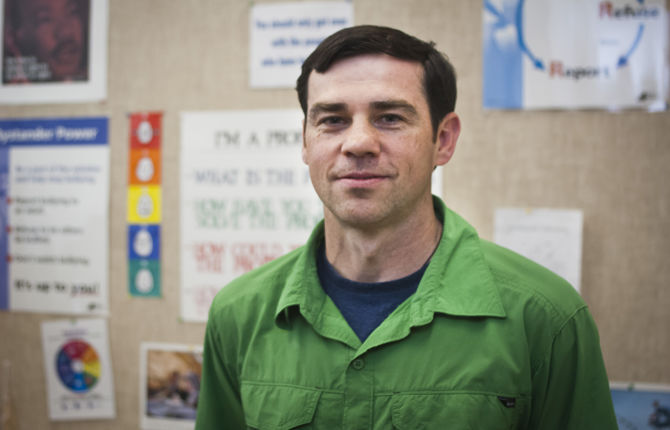
All of these examples are the most common ways that kids who have experienced trauma behave in class, said Calum Robertson, school counselor at Col. Wright Elementary and a proponent of what is called trauma-informed education.
North Wasco County School District 21 aims to become a trauma-informed school district, one that looks at a child’s behavior and asks a more compassionate “what happened to you?” instead of a finger-wagging “what’s wrong with you?”
It is a shift from punishment and blame to understanding and healing, according to a website promoting the documentary “Paper Tigers,” which shows the success of trauma-informed schooling at an alternative school in Washington.
It is a system that not only helps the traumatized child, but makes for improved classroom settings for all students.
The timeframe for becoming a trauma-informed school district is ongoing, said District Superintendent Candy Armstrong.
“It is very dependent on changing the school culture and that takes time and ongoing monitoring,” she said. “Staff need to understand not only how toxic stress impacts the brain, but also how to interact with children who have high ACE’s [adverse childhood experience] scores and how to interact with their families. Not in a judgmental way, but in an understanding and helpful way.”
She said the idea of having trauma-informed schools is “fairly new throughout the country.” North Wasco is one of seven school districts in Oregon pursuing trauma-informed education.
“We are on the cutting edge of bringing this into our districts,” Armstrong said.
Robertson said the impact of trauma is not pervasive locally, but it’s noticeable.
As he’s learned more about how traumatized students behave, he’s realizing how many of them exhibit those behaviors.
Traumatized kids “are the kids that are stressful for teachers and take up a lot of time trying to redirect and re-engage them and can be disruptive to the class for learning,” Robertson said.
The old-school response to highly disruptive kids is to suspend them. But that just leads to them dropping out and perhaps turning to criminality, Robertson said.
He joined other educators from The Dalles and statewide recently for a one-day visit to a school in San Diego that has taken the trauma model to heart.
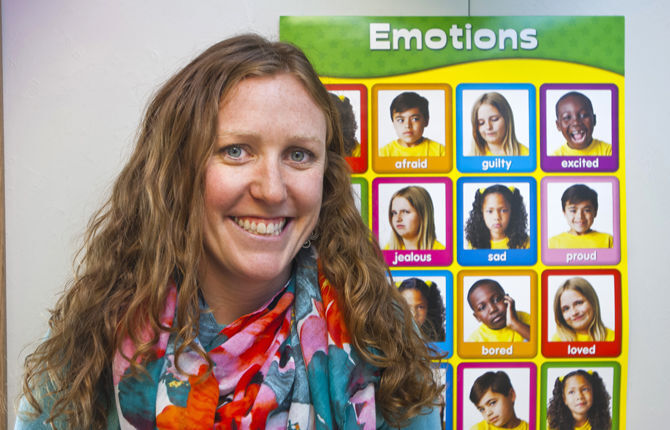
Mairead Beane Kelly, a teacher at Chenowith Elementary, also went to San Diego.
“The research findings are striking,” she said. “Individuals who have experienced four or more traumatic events like abuse, neglect and loss of a parent before the age of 18 are at much higher risk to fall behind or drop out of school, abuse substances, experience mental and physical health problems and chronic disease.
“There is hope, however,” she said. “Teaching our students and communities about the effects of trauma on the brain is necessary, in addition to building resilience.”
She encouraged people to take the Adverse Childhood Experiences survey, at acestudy.org/survey. She also encouraged people to come to the free film screening and discussion of “Paper Tigers” on Wednesday, May 18 at Columbia Gorge Community College.
Beane Kelly said the San Diego elementary school has become a central meeting place for families, organizations (both secular and religious). “They have created a mini-village that is raising their children.”
Free classes on trauma, parenting, English language, immigration and more are offered at the school, Beane Kelly said.
“He works relentlessly to bring in supports and services that his students and families need. By involving other organizations, he has freed his teaching staff to just be good teachers,” Beane Kelly said.
The San Diego school has seen disciplinary issues and suspensions go dramatically down as a result of the trauma-informed model.
“Everybody has trauma, because we’re human beings,” Robertson said. But if children are traumatized, especially at an early age, when they can’t escape it, or even verbalize it, it affects brain development.
Trauma affects every aspect of what is expected of a child in a classroom: attention, information processing, planning, problem-solving, and frustration tolerance.
Traumatized students also lack a sense of belonging and a sense of safety. “They don’t know what that is,” he said.
Trauma-informed schooling represents a sea change in thinking.
Old thinking might have been: “This kid is disruptive on purpose, he’s manipulative, he or she is doing this basically to get something, he’s doing attention seeking,” Robertson said.
The new thinking, Robertson said, instead thinks “what actually happened with this kid? What experiences did this kid have?”
He’s recognizing that “this kid is using the skills that they have and is trying to regulate and navigate the best they have, based on the trauma they’ve been through.”
Trauma doesn’t affect all kids the same, of course. Some kids are naturally more resilient, or they may have a safe connection, such as a trusted adult, a church they go to, or a feeling of accomplishment, such as being good at math, Robertson said.
For Robertson, he’d like to see mental health counseling provided in the school setting. Now, it is farmed out to parents to arrange.
But, that is all still to be addressed, he said. “It’s very hard to draw a line of, what do we need to do as a community, as a school, as families.”
He said, “I think we all need to do better about reaching out to our families and understanding them better. I know I do.”


Commented
Sorry, there are no recent results for popular commented articles.