
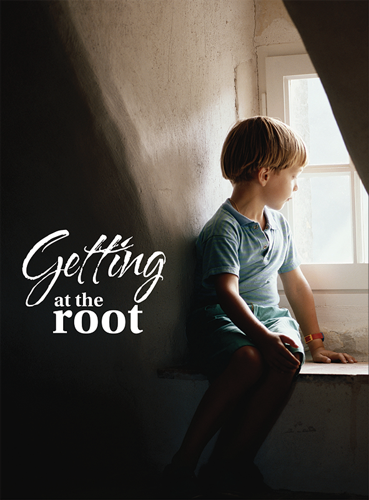
A child stands at her bedroom door listening to her parents yelling at each other. She waits for the sound of a punch. The screaming gets louder and then there is the thud of someone being hit. The child feels afraid and angry.
She wants to run out and stop the violence, but it hasn’t done any good before. The child feels guilty, as if the violence is her fault and it is her responsibility to stop it. There isn’t going to be much sleep tonight.
The child feels lonely, she doesn’t have anybody to talk to about the problems at home. If she talks, they might take her away or mom and dad could be in trouble.
Her parents remain unaware of how much their child is affected by, and absorbing, physical and/or emotional abuse in their home.
The roots of domestic violence lie in childhood trauma and Louise Bauschard, founder and executive director of Voices Set Free, is on a mission to stop the cycle of aggression and victimization.
Bauschard said evidence-based research shows that children who grow up with exposure to violence tend to have lifelong physical and psychological issues to grapple with.
These children are six times more likely to commit suicide and 50 percent more likely than their peers to abuse drugs or alcohol. In addition, they are 74 percent more likely to commit a violent crime.
The scope of the problem is huge, and studies pointed out by Bauschard have shown that one in three women and one in seven children have experienced abuse.
The United Nations Children’s Emergency Fund reports that domestic violence is “one of the most pervasive human rights issues of our time,” and affects more than one billion people worldwide.
“The only way we’re going to change patterns is to help people understand and heal their childhood trauma,” said Bauschard, a licensed clinical social worker.
Toward that end, Voices Set Free is bringing the Childhood Domestic Violence Symposium to Hood River on Saturday, Aug. 25. Ten of these workshops have already been held in Portland and the nonprofit intends to hold them around the state.
The symposium in the Gorge takes place 9 a.m. to 4 p.m. (doors open at 8:30) at Hood River Juice Company, 550 Riverside Drive. Cost is $150 and includes lunch. In order to guarantee lunch, people are encouraged to register in advance at http://www.voicessetfree.org/symposium-info-html. The course offers 5.25 hours of non-clinical continuing education credits.
Bauschard said the forum is open to professionals in the social services field, educators, business leaders, civic organizations and community members.
“Everyone is welcome,” she said. “This is about helping people understand the complex dynamics of family violence and its lifelong impact on children.’
Voices Set Free, a domestic violence organization located in the Family Justice Center of Washington County, has teamed up with the Childhood Domestic Violence Association of New York to provide tools that can combat the spread of abuse in Oregon. Another partner is Trauma Informed Oregon, a collaborative created by the Oregon Health Authority in 2014 to promote prevention efforts.
Building awareness and the capacity of others to intervene is key to reducing family abuse, said Bauschard. She has earned national distinction as an advocate for battered women over the past 40 years. In that capacity, she has visited many of the women’s prisons in the U.S. to hear the stories and assist women who end up behind bars for injuring or killing their attackers.
Bauschard visits Coffee Creek Correctional Facility, the only women’s prison in Oregon, on a regular basis. She said her heart has broken many times since Voices Set Free was established in 1997, which has just made her more determined to bring about reforms in the system.
Sometimes the only choice is between a headstone and handcuffs, she said.
“There are a lot of women sitting behind bars who should not be there,” said Bauschard. “The level of pain I’ve seen is incredible.”
Recently, she came to realize that the complex dynamics of family violence sets the stage for the domestic violence cycle to play out in the next generation. According to UNICEF’s report, “Behind Closed Doors,” The Impact of Domestic Violence on Children,” growing up in a violent home is the single best predictor of becoming a perpetrator or victim of domestic violence later in life.
Bauschard has created curriculum and taught at several Oregon universities, served on task forces, committees, counsels and played major roles in starting several nonprofits.
She said much of the curriculum for the upcoming training comes from the book “Invincible: The 10 Lies You Learn Growing Up with Domestic Violence and the Truths that Set You Free,” by Brian F. Martin, founder of CDVA. The author said it is the first book to speak directly to those who spent their youth in a domestic abuse environment.
The book is a guide to help people understand what they experienced, how it changed them and how they can overcome a false sense of guilt and shame to reclaim their lives and future.
Bauschard has invited a panel of survivors to share their stories Aug 25, along with the lessons they learned and how they built resiliency, which is the ability to overcome challenges of all kinds.
Attendees will learn what trauma is and what it is not. Participants will learn how our society retraumatizes victims by trying to help them.
“We keep asking victims to tell their stories, but they need to do that on their own when they are ready to,” said Kimberly Perez, one of the speakers.
“Once they tell their story they need to own their past by learning their triggers and realizing that they have the power to change their lives.”
Perez, who lives in The Dalles, is a family specialist with Certified Health Workers who is licensed to facilitate Peerzone Workshops in trauma and addictions. She is a member of the Family Workforce Association in Salem that focuses on children with neurological developmental disabilities, which has been linked to childhood trauma in some cases. She has been part of the Voices Set Free team since 2011.
Maeve Swakhammer holds a bachelor’s in social work and is the Childhood Domestic Violence coordinator at Voices Set Free. She is a survivor and currently is developing pilot programs using the tools of CDVA to train professionals in the field, adult survivors and their children.
“It’s a huge component to ending domestic violence; instead of treating at symptoms, it addresses the causes,” she said of the tools. “Everything is written in layman’s terms, it’s very understandable.”
Sheba Hulsing, direct services advocate at Call to Safety, a hotline for victims, is also a confidential advocate for survivors of the sex trade. She has studied the neurological effects of lived trauma as well as how to heal the mind following trauma exposure. Through her lived experience, she helps people understand the effects of early trauma on the mind and the ways to rewire the brain to overcome negative patterns.
Eric Welch is a parent mentor at Morrison Child and Family Services and a member of the Parents Advisory Council and the Fathers Advisory Board. He works specifically with men to address a multitude of problems, such as engaging drug and alcohol treatment and anger management treatment. He has participated in the Change a Life and Courage Unleashed programs created by the Childhood Domestic Violence Association.
“This group has got it really put together,” said Bauschard. “People who come to the symposium need to hear from those who have real-life experiences, I’ve always felt that.
“Their messages have the power to change lives.”


Commented
Sorry, there are no recent results for popular commented articles.