
When Cycle Oregon came through Shaniko and asked for 24 volunteers, Goldie Roberts, the town’s 75-year-old mayor, had to be creative.
“We have a population of 24 when the kids are in town, not counting the dogs,” she said.
According to the 2010 census, the population of Shaniko, located in Wasco County 75 miles south of The Dalles, is 36 but Roberts believes that number is high. There are 21 registered voters and seven kids, ages 14 months to 18 years. Five of them ride a school bus 26 miles to Maupin.
Roberts moved to Shaniko from Kansas with her parents in 1962.
“Everybody in the summer asks me ‘how can you stand to live here?’” Roberts said. “If you’re born and raised on the plains of Kansas, this don’t bother you. Dad said this reminded him of Kansas and this is where he wanted to be.”
Roberts left and then moved back to Shaniko permanently in 1982.
When the Shaniko Historic Hotel reopened on April 17, 1988, Roberts worked as a maid and then a waitress until she began running a seasonal ice cream parlor in 2000. Roberts was on the city council before she was voted mayor.
The hotel shut its doors in October 2006 and remains closed. That isn’t uncommon. The only business open year round is the General Store. Roberts will begin serving ice cream in April. Sandy Cereghino, the president of the chamber of commerce, opens Juniper Creek Gallery around the same time. There’s also a t-shirt shop that opens in May.
Roberts drives either to Maupin or 37 miles to the Safeway in Madras for her grocery shopping.
“You have to watch the dates,” she said. “I need to go get me a lottery ticket. It’s $6.5 [million] tonight but I won’t go.”
Even in its heyday, Shaniko never had a church or a cemetery, just a small chapel for weddings. Roberts attends services in Antelope. She goes to the doctor in Redmond.
And wherever Roberts goes, Madras or Redmond, she makes sure to fill up her tank because Shaniko has no working gas station, which many tourists learn about the hard way.
“You ought to see these people who come in the summertime,” Roberts said. “One guy said, ‘Shaniko is a big size name on the map, we figured you had gas here.’”
Those who are truly desperate can buy gas from the General Store. A two gallon can sells for $20.
“You might swallow hard but if you’re really desperate for gas, go over to the General Store,” Roberts said. “They figure if you’re dumb enough to come to town without gas, you’re dumb enough to pay the price.”
Because of the city’s distance from The Dalles, it can also take hours to get a coroner.
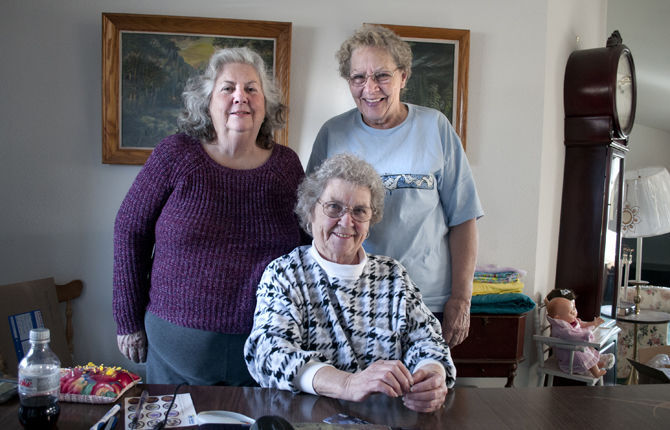
“Better not die out here,” said Shirley Stevens, 82, who began visiting Shaniko with her boyfriend Jim in 1985. They’d play pinochle with Roberts and her husband Richard.
In 1995, Stevens retired and made Shaniko home. Jim died in 2000.
“I’m just content living here,” Stevens said. “I’m not one that has to run to town all of the time. I don’t go to movies or out to dinner a lot. There’s days I don’t hardly leave the house.”
Susan Paterson, a retired lawyer and judge from Alaska, moved to Shaniko six years ago to be with her boyfriend Richard Kunkel—owner of the General Store.
“It’s an interesting little area to live in but it is far away from stuff,” Paterson said. “My preference would be to live someplace else but a lot of people like it out here. They like the solitude. We do get beautiful skies and beautiful starlit nights and amazing harvest moons. That kind of stuff is really cool.”
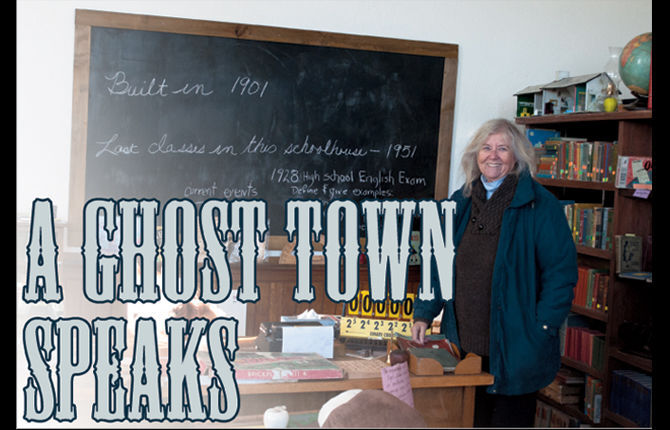
Paterson has turned the old Shaniko School, which closed in 1951, into a toy and game museum and library with a computer and Wi-Fi access.
Most of the toys and games are from Paterson’s personal collection. The museum includes games from the 1890s. Some of Paterson’s favorites are Monopoly from Syria, which instead of railroads has chicken farms, and Snakes and Ladders, which was invented in India but was thought to be too scary when it came to the U.S. so it was changed to Chutes and Ladders. There’s also one-room doll houses for people who couldn’t afford a complete house.
“I was an only child so my toys and games didn’t get wrecked and my parents saved them and then I started collecting Monopoly games as I traveled around the world,” Paterson said.
During the winter, the museum is open one weekend a month and every weekend in the summer. Entrance is by donation.
Lauren Cortez, 53, moved to Shaniko 15 years ago from Forest Grove.
“I was sick and tired of all the hustle and bustle,” she said. “My father was a rockhound jewelry maker and we used to come on rock hunts here. They had a jewelry shop here for 11, 12 years.”
Cortez has worked at the Shaniko Post Office for 14 years. Like the rest of the town, she said business is slow in the winter but picks up in the summer.
“I get tourists that come in and want stamps a lot of times because it’s such an old post office,” Cortez said. “I’ll get an occasional person off the highway to pop in and mail something, especially if it’s truckers because our post office is really easy for them to get to.”
Cortez’s daughter Virginia has five of the seven children that live in town. At age 33, she is one of the youngest adults and drives to Redmond to work with mentally challenged youth.
Anyone who wants to know the history of Shaniko can see Debra Holbrook at the museum.
After visiting with a group of Oregon history students, Holbrook moved to Shaniko 20 years ago from Junction City. She, along with Don Schmidt, formed the Shaniko Preservation Guild.
“This place just kind of calls you,” Holbrook said. “I met a man [Schmidt] who grew up here, just out of town, he had retired in ‘96, which is when I started looking into the history and he mentored me and helped find the people that used to live here.”
While the winter is slow, Holbrook gets around 200 visitors a week during the summer. They come from all over— including from as far away as Germany and Ireland.
“When the sun shines, there are people out and about,” Holbrook said. “I pay the light bill with what people leave in the box. That makes me grateful.”
The city was named after settler August Scherneckau, who the Indians called ‘Shaniko.’
The post office was established in 1900 and then the hotel was built.
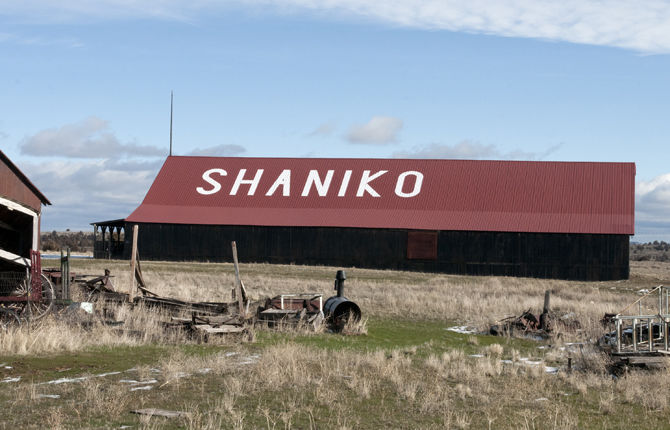
In 1899, W. Lord and B. Laughlin pooled $42,000 to form the Shaniko Warehouse Company. Completed in 1901, they built the largest warehouse in the state at that time. The 600-foot-long building could house four million pounds of wool, all the wheat in the area, room for building materials and fuels such as coal and wood.
By 1903, Shaniko was known as the ‘Wool Capital of the World’ after a $3 million sales record. In 1904, the city had a record wool sale of $5 million.
According to the 1910 census, Shaniko had a population of 600 and appeared to be growing.
However, 1911 was not a good year for the town. Most of the business district burned in a major fire, some never to be rebuilt. Mayor John Fowlie was shot and killed and the railroad linked Bend to the Columbia Gorge, which began to draw business away from Shaniko.
The population declined to 124 in 1920 and Shaniko turned from the ‘Wool Capital of the World’ into Oregon’s best known ghost town.
Today, like many ghost towns, Shaniko is a tourist attraction.
The rafters coming off the John Day River keep Roberts’ ice cream parlor open late on Sunday evenings. She also gets business from women who come through on their way to Sisters for the annual outdoor quilt show.
The city holds Shaniko Days the first weekend in August to celebrate the water pipes that were replaced in 1986.
“We used to have a really good turnout. It’s diminished over the years,” Paterson said. “We used to have a great big parade. Now we have a little parade and we used to have a lot of vendors and now we have a few vendors. We’re hoping it will improve.”
Shaniko has a car club in September. Last year, 80 cars lined up through downtown.
“This is for the average Joe and you can bring any kind of car out there and they’ve got a category for lots of different cars,” said Mary Wright, whose husband Sid serves on the city council. “They get really excited about it.”
The big issue facing the city council is fire protection. Shaniko had a deal with the South Sherman Fire District in Grass Valley but late last year, a local option levy that could have caused property taxes to increase more than 3 percent ended in an 8-8 tie, causing it to fail. Roberts said the issue would be back on the ballot in November with different wording.
Shaniko is also working with the South Wasco Alliance to get new picnic tables.
With the median age at 80, Roberts is worried about the longevity of the town.
“I don’t want to see it fold up and blow away,” she said.
“I have a feeling if something happens to me, at my place everything will be for sale real quick because my kids aren’t that interested in it up here,” Stevens added.


Commented
Sorry, there are no recent results for popular commented articles.