

Long ago, when the world began, the Creator called a grand council of all plants and animals. He asked each for a gift to give the helpless new humans, who needed help to survive. The very first to come forward was salmon, which offered his body to feed the people. Water then promised to provide a home for the salmon. The Creation Story posted on the Columbia River Inter-Tribal Fish Commission’ website explains that both water and salmon were to be honored for their sacrifices, which is done through the First Salmon Feast each year.This religious ceremony must occur before open fishing can take place.
From
To
ROSEBURG, Ore. – Tests have confirmed that deer in the Roseburg area are dying from Epizootic Hemorrhagic Disease (EHD), a disease that has not been seen in deer in this area of Oregon before and is transmitted by gnats, which are abundant this year due to low water levels.
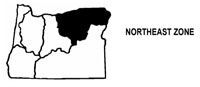
Morrow, Gilliam and Wheeler Counties The signs of spring are all here in the Heppner area. Sandhill cranes have been seen heading north for the summer. The official first sign of spring for the Heppner area, a Say’s phoebe has been seen and heard in the area. The earliest of our summer migrants are starting to appear. Long billed curlews can be seen in a few wheat stubble fields. Mobs of ravens can be seen in the foothills as can golden eagles. There are still a few rough-legged hawks in the area and can be seen in the north half of the District. Short-eared owl can be seen along the grasslands of the north end of the District. Our year-round resident raptors, red-tailed hawks, Northern harriers, and American kestrels are all easily found. Heppner’s merlin has been seen in the area as well. Prairie falcons can also be seen in the area, although much rarer to be found. Sharp-shinned hawks can be seen along the riparian areas of the north half of the District. Western meadowlarks can be seen in most grassland areas. In the yards of the district, one can find the common songbirds around the feeder. Dark-eyed juncos, song sparrows, house sparrows, white-crowned sparrows are all easily found. American gold finches and Rufus sided towhees can also be see in the Heppner area.
Morrow, Gilliam and Wheeler Counties Rough-legged hawks can be seen throughout most of the north half of the District. Short-eared owl can be seen along the grasslands of the north end of the District. Our year-round resident raptors, red-tailed hawks, Northern harriers, and American kestrels are all easily found. Heppner’s merlin has been seen in the area as well. The remaining ravens are our resident population, the mobs have headed south. Prairie falcons can also be seen in the area, although much rarer to be found. Sharp-shinned hawks can be seen along the riparian areas of the north half of the District.


