

eNews has been a volunteer initiative of Sherry Kaseberg for many years, informing those who care about Sherman County and the wider world. She will end publication with the close of 2019. Her electronic news will be missed by me and by many others.
eNews has been a volunteer initiative of Sherry Kaseberg for many years, informing those who care about Sherman County and the wider world. She will end publication with the close of 2019. Her electronic news will be missed by me and by many others.

Although the February holiday now known as President’s Day — this year on Feb. 19 — is still officially on the books as Washington’s Birthday, it has morphed into a time to remember all 45 men who have led the country. The holidays switched from honoring President George Washington, one of our founders, on his Feb. 22 birthday to Presidents’ Day as part of the 1971 Uniform Monday Holiday Act, which sought to create more three-day weekends for the nation’s workers.

On July 4, 1776, members of the Second Continental Congress met in Philadelphia to adopt the final draft of the Declaration of Independence, proclaiming American sovereignty from Great Britain. As Americans celebrate their 241st Independence Day Tuesday, here are some fascinating facts to consider:
“Sticks and stones may break my bones, but words will never hurt me.” Not true, except perhaps for a person with a listening impairment. And if we move from the singular “me” to a collective “me,” this old aphorism is even more wrong. Words have power, and we are in a word storm, a storm that may have serious effects on the long-term health of our political and social environment.

The Fourth of July is America’s annual birthday party that unites people across the nation in celebrations that include parades, barbecues and fireworks. The Dalles Chronicle staff would like to add to the festivities this year with a few fun and/or interesting facts about America’s early history and the the founding fathers who set up the greatest experiment in governance by the people that the world has ever known:
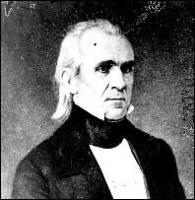
Q: What do Abraham Lincoln and George Washington have in common? A: They were both born on a holiday.
To the editor: I would like to respond to RaeLyn Ricarte about how to re-establish the proper separation of powers. This cannot all be put on the president’s hand when Congress is so broken. Even Thomas Jefferson was pragmatic about extending the power of the president when he thought it important.

In June of 1776, Thomas Jefferson was pressed by a committee from the Second Continental Congress to write an explanation for colonists, and justification for the rest of the world, about why it had become necessary to seek independence from British rule.


