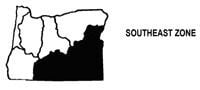
SOUTHEAST ZONE VIEWING Waterfowl spring migration has slowed and most white geese and white-fronted geese have headed migrated north. Pintail, shoveler, wigeon, mallard, gadwall, green-winged teal, cinnamon teal and a variety of diver species can still be viewed in good numbers. Sandhill cranes can be found in agricultural fields throughout the Harney Basin.
Resident nesting species such as mallards, gadwall and cinnamon teal are still numerous, but will be harder to locate as females will be busy tending nests and broods. American wigeon, shoveler, green-winged teal and wood duck can still be seen, but are less common as most have migrated through. Numerous Canada goose broods have been seen and can be found throughout Crook County.
Bird watching is not just limited to wild places, as residents and visitors to Bend can watch an osprey pair nesting adjacent to the Parkway that runs through Bend. Sandhill cranes have been spotted in a meadow near Sisters and at the Ryan Ranch area along the Deschutes River; above Dillon Falls. And Vaux’s swifts can be seen flying over the former Bend library at 507 NW Wall St., and disappearing into the chimney at dusk.
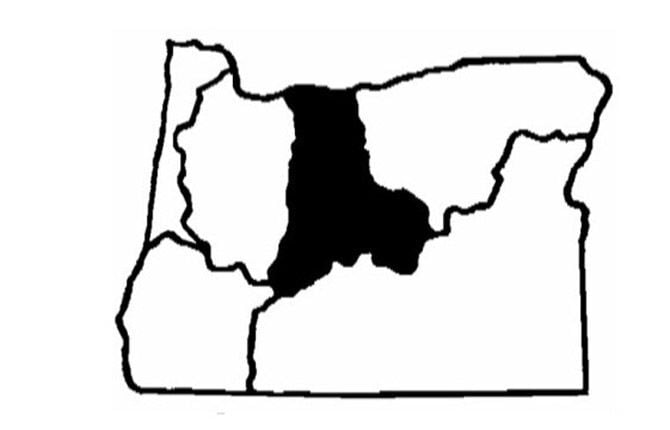
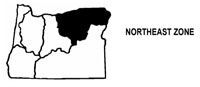
Morrow, Gilliam and Wheeler Counties The signs of spring are all here in the Heppner area. Sandhill cranes have been seen heading north for the summer. The official first sign of spring for the Heppner area, a Say’s phoebe has been seen and heard in the area. The earliest of our summer migrants are starting to appear. Long billed curlews can be seen in a few wheat stubble fields. Mobs of ravens can be seen in the foothills as can golden eagles. There are still a few rough-legged hawks in the area and can be seen in the north half of the District. Short-eared owl can be seen along the grasslands of the north end of the District.
Morrow, Gilliam and Wheeler Counties The signs of spring are all here in the Heppner area. Sandhill cranes have been seen heading north for the summer. The official first sign of spring for the Heppner area, a Say’s phoebe has been seen and heard in the area. The earliest of our summer migrants are starting to appear. Long billed curlews can be seen in a few wheat stubble fields. Mobs of ravens can be seen in the foothills as can golden eagles. There are still a few rough-legged hawks in the area and can be seen in the north half of the District. Short-eared owl can be seen along the grasslands of the north end of the District. Our year-round resident raptors, red-tailed hawks, Northern harriers, and American kestrels are all easily found. Heppner’s merlin has been seen in the area as well. Prairie falcons can also be seen in the area, although much rarer to be found. Sharp-shinned hawks can be seen along the riparian areas of the north half of the District. Western meadowlarks can be seen in most grassland areas. In the yards of the district, one can find the common songbirds around the feeder. Dark-eyed juncos, song sparrows, house sparrows, white-crowned sparrows are all easily found. American gold finches and Rufus sided towhees can also be see in the Heppner area.
EVENT The 32nd Annual John Scharff Migratory Bird Festival, April 11-14 2013, Burns Spend an amazing weekend witnessing the spectacular spring migration in the Harney Basin of Southeast Oregon. View thousands of migratory birds as they rest and feed in the wide open spaces of Oregon's high desert. From waterfowl to shorebirds, cranes to raptors, wading birds to songbirds, you'll see it all! The festival offers non-stop birding activities as well as historical and cultural information sure to entertain you and your family. So whether you're a beginner or a life-long wildlife enthusiast, the festival has something for everyone. More information can be found online at www.migratorybirdfestival.com