A.N. Other’s latest is: “A glutton’s greedy sense of taste shows little sense but lots of waist.” At the bridge table (unless you are playing in a pair event, where overtricks can be valuable), a greedy player who risks his contract trying for an overtrick shows little sense and lots of waste.
Thomas Fuller, an English curate, author and historian who died in 1661, said, "If thou art a master, be sometimes blind; if a servant, sometimes deaf." If thou art a bridge player, be never deaf nor blind. Listen carefully to the auction and watch closely every card played.
Yesterday, I stressed considering your options at trick one. Here is another example. If South plans carefully, he has a good chance to make his contract. But if he plows forward thoughtlessly, he will probably fail. South is in four spades. West leads the club king, and East signals with his jack. What should declarer do?
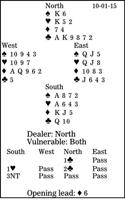
Bridge players always think — although experts think more than others. Today’s deal requires careful thought. South is in three no-trump. West leads his fourth-highest heart. What should South do after winning with his jack?
The trick is always to play bridge — whether in pairs, teams or Chicago — keeping the odds in mind. In today’s deal, what is the right way to play the heart suit for no losers?
Lea Michele, an actress and singer, said, “I didn’t know I could sing until I auditioned for ‘Les Miserables.’ My friend was auditioning, and I wanted to audition too.” Many bridge players would find out that the game isn’t as hard as they thought if they spent longer auditioning every auction, asking themselves what each call means.
Michel de Montaigne, a 16th-century French essayist who was well-known for combining intellectual exercises with casual anecdotes, said, “In nine lifetimes, you’ll never know as much about your cat as your cat knows about you.”