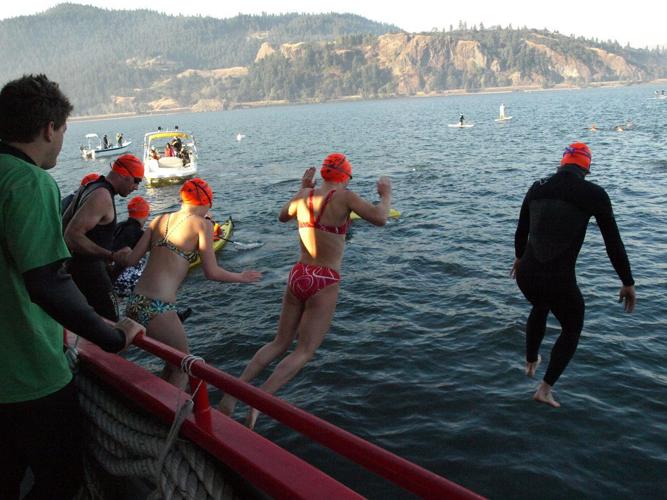
When participants dive off the Sternwheeler early Monday morning to take part in the 73rd annual Roy Webster Cross Channel Swim, members of a Gorge amateur radio group will be helping to ensure it all goes safely.
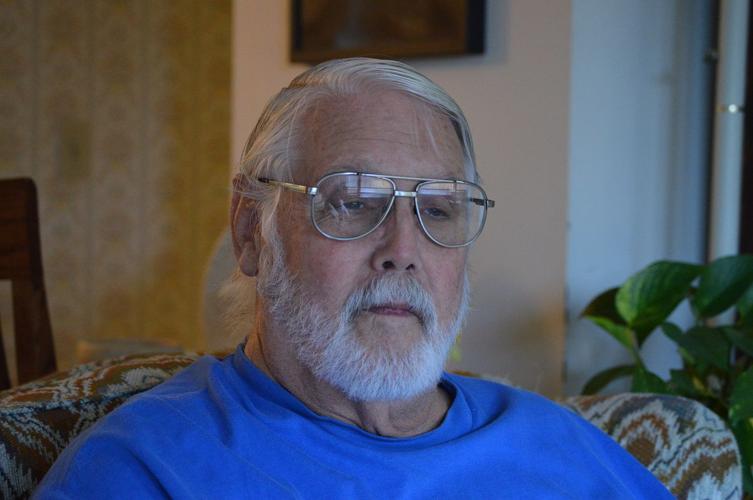
Radio Amateurs of the Gorge — or RAGS — has provided communications services at the cross channel swim for decades. Longtime member and RAGS Cross Channel coordinator Gene Mielke has worked at the event since moving to town in 1984, but believes the group’s history goes back even farther.
“We provide communications between all the law enforcement folks, the Corps of Engineers and the Coast Guard, if they happen to be there,” said Mielke, who serves as “net control,” or the primary contact person between RAGS relayers at the event.
About 15 members will spread out on land and water, talking with each other via UHF. This frees up tactical frequencies for emergencies elsewhere.
“We have a couple of people on the Sternwheeler, one with the captain and one on the deck, saying which flights have gone into the water. We have a person at the port … and we have a person on the docks at the Hood River Inn — anyone taken out of the water is taken there, so we know who has been taken out of the water so friends and relatives can get to them,” he said. “We also have people at the check-out tables, so we can relay to them who has been taken out of the water, so when they get through, they’ve accounted for everybody.”
While most make it across, Mielke has seen a host of reasons why some do not, from exhaustion to dehydration.
“Occasionally, we’ve had to call 911,” he said, noting that Hood River County Sheriff Matt English has posted an ambulance at the port the past few years.
Though the group volunteers its hours and equipment, they gain valuable experience with each event.
“We have a critique of our own activities to see how we could have done better and how events have gone in the past,” Mielke said — changes have included bringing duct tape to attach portable antennas to boat canopies and moving the jump-off point on the Sternwheeler to improve radio reception.
This isn’t the only event where RAGS volunteer; members work annually at horse endurance rides in Washington, bike rides in The Dalles, and emergency simulations in Hood River. Like the cross channel swim, these events are “a public service activity (that) gives us a chance to work with some of the public service agencies, particularly with the sheriff and marine deputies,” Mielke said. “We get a better idea of what we can do — not tactical communications but logistical. We don’t tie up the official channels.”
There are radio amateurs in every country in the world, he added, and in every county in Oregon. In times of emergency, they are the ones who are able to connect services to the people who need them.
Take, for example, the flood of 1996, when communications went down. “The amateur radio group provided backup communications, including communication to Portland — at that time, we didn’t really have cell service available,” he said. “Part of the communications at that time involved getting the life flight people to the dialysis patients; they flew the people to Portland and we arranged with the amateur radio people in Portland to have a bus company take them to the respective places where they got their dialysis. That’s between, of course, the helicopter (used in life flight), the bus company and the local hospital.”
There are many types of amateur radio enthusiasts — or, more accurately, different areas of interest. “Some people are only into what’s considered the lower bands, and some are active in what’s called UHF frequencies, similar to what the police use,” he explained. “It’s a very interesting activity. There’s a lot of things people can do as hobbies involved with it.”
For more information about RAGS, visit the website at w7rag.com.
“It’s a great group of people and it’s kind of like an extended family,” Mielke said.