
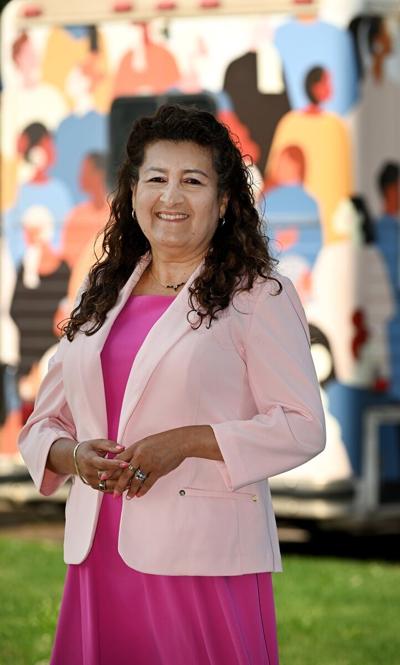
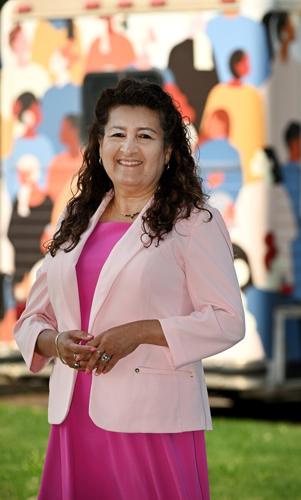
The waiting room had barely emptied before Vicky Valle was already thinking about the next mother. Would this mother remember her appointment next week? Would she have transportation? Did someone explain the ultrasound? Was she drinking enough water? Who did she plan to have beside her when the baby came?
Even though Vicky's title at One Community Health is Community Health Worker (CHW) and Perinatal Case Manager, her mind has never worked in charts or schedules. It has always worked in people and the moments when compassion matters most.
"I really like to connect with the patient and the community," she says. "I enjoy supporting patients during pregnancy and postpartum and making sure they connect with the services they need to have healthy babies."
If you have had the privilege of meeting Vicky in person, you know that every attempt to learn more about her is gently redirected toward someone else. Her focus has always been on the people she serves, never herself. A first-time mother, the nervous father last week, the newborn baby a few years ago, and the family trying to understand a diagnosis. She has spent so much of her life making sure others feel seen that talking about herself seems foreign.
Vicky’s health career actually began hundreds of miles from the Gorge. She was born and raised in Morelia, Michoacán, Mexico, and as a little girl, she was captivated by caregiving. Around the age of seven, Vicky began noticing the people who cared for others, like the neighbor she saw visiting families when they were sick. She watched the woman give injections and offer comfort to those in need. Vicky also accompanied her mother to the hospital, where she watched nurses take blood pressure readings, explain procedures, and quietly reassure patients.
Some of her earliest memories happened even closer to home. "My mom had ten deliveries. Five at the hospital and five at home with a midwife. I remember my mom had a delivery, and my room was next to hers. I heard my mom when she had contractions, when she was pushing, I was never scared. I think that's when I knew," she said. "I wanted to be a nurse."
She was the fourth of ten children and giggles how, as she got older, she never really had toys. She was busy playing house, helping with the babies, feeding them bottles, changing their clothes, and learning how to make homemade tortillas.
After earning her nursing degree in Mexico at La Universidad Michoacana de San Nicolás de Hidalgo, Vicky began working in hospitals and clinics, caring for patients in pediatrics, surgery, emergency medicine, and general patient care.
"I worked in the hospital, in clinics in Mexico. During my time when I was working as a nurse, I was also doing outreach."
She traveled into communities teaching families about childhood illnesses, nutrition, immunizations, and infant care. She helped parents understand when to seek medical attention and how to care for their children before small concerns became emergencies.
When Vicky came to the United States to visit her brother, she never expected the visit would become a new life. “The plan was just to come and visit my brother. But then I married my husband a couple of months later. He came from Mexico. So, we married here,” she says with a smile. “And then we decided to stay here.”
They fell in love with the Columbia Gorge and made it their home. But like so many immigrants before her, she discovered that the professional life she had built in Mexico could not be carried across the border. So she started over.
She picked pears and apples in the local orchards. She worked in packing houses and in restaurants, all while expecting her first child. It wasn't the future she had imagined, but those years she worked in the orchards would affect her career and the families she would one day serve.
"I understand my community because I worked in the orchards," she said.
Vicky knows what it feels like to leave home before sunrise for a physically demanding job. She experienced what it means to build a life in a country where the language, the paperwork, and the healthcare system all felt unfamiliar. And more importantly, she understood why keeping a medical appointment isn't always as simple as putting it on a calendar.
Around the same time Vicky was rebuilding her own life, the healthcare leaders in Hood River were facing a difficult realization. Excellent medical care was available inside the clinic, but the problem was many farmworker families never made it through the front door. Long workdays in the orchards, transportation challenges, language barriers, and unfamiliar healthcare systems often kept families from receiving preventive care until someone became seriously ill.
Something had to change. And the change couldn’t come from another physician or nurse. It was trust.
Through a new pilot program called El Niño Sano, community health workers began meeting families where they already were: in orchards, labor camps, schools, and homes. Instead of waiting for patients to find healthcare, healthcare went looking for them.
Because of the program, the community health workers started to see that mothers were receiving education before complications developed. The program also helped parents understand why well-child visits mattered. And many families were beginning to discover that healthcare could be something they understood instead of something they feared.
For Vicky, every piece of her life suddenly fit together. It was as if the job was created for her. She understood Mexican culture, spoke the language, and was educated in healthcare. And she also had something that set her apart from many: she had empathy for what it felt like to begin again, she knew the life of migrant workers in the Columbia Gorge.
When Vicky interviewed for the El Niño Sano pilot program, everything she had lived and experienced suddenly found its place. After she was hired, she had to complete hundreds of hours of specialized training. She was stepping into a pioneering role as one of the Columbia Gorge's original community health workers, who would blend the nursing education she had earned in Mexico with a new model of care built on trust.
For most families, Vicky enters their story long before their baby does. A positive pregnancy test is often where their paths actually begin. From that first appointment, then on to delivery and through postpartum care, she helps families navigate every step of the journey. She helps confirm the pregnancy, schedules the first prenatal visit, and arranges the dating ultrasound. As the pregnancy progresses, she keeps track of appointments and screenings that need to happen next, including anatomy ultrasounds, glucose testing, and referrals for specialty care. If a patient needs services through WIC, the Oregon Health Plan, dental care, behavioral health, or a provider outside the Gorge, Vicky helps make those connections and follows up to be sure they happen.
More often than not, you will find her sitting with her patients, explaining what the tests are for and what the results may mean. She helps patients understand gestational diabetes and how changes in diet, activity, and blood sugar monitoring can protect both mother and baby. She provides childbirth education, breastfeeding support, family planning information, and guidance on infant care. During pregnancy and after delivery, she screens for depression and connects patients with counseling when they need more support.
Much of her work happens in the spaces between medical appointments. A provider may have only a short visit to diagnose a condition or recommend treatment. Vicky is there to gently walk them through what comes next and make sure they have the support, resources, and confidence to move forward. It is the difference between giving someone information and helping them use the information.
"If every pregnancy is different," Vicky said, "every delivery is different."
There is no script, and no two families need exactly the same thing. That is why she never rushes understanding. She believes education is one of the greatest gifts she can give.
"I like to provide my knowledge," she said, "because that's the way we learn from people."
Not every woman who arrives to give birth has someone waiting beside her. Some are far from family; others are navigating pregnancy in a new country. Before One Community Health had a doula program, Vicky often became that person.
She stood beside hospital beds, reminding mothers to breathe through contractions, explaining what was happening when fear took over, and staying with them until their babies were safely placed in their arms.
Today, One Community Health's perinatal program includes an entire team of providers, nurses, doulas, educators, community health workers, and Vicky. She is right there, helping families navigate pregnancy and unfamiliar healthcare systems, and serving as a bridge between medical providers and patients. Vicky is the glue, the person who helps to explain, translate, encourage, and listen.
"When I came almost forty years ago," she says, "I didn't know anyone, only my brother and my sister."
Today, when she speaks to other immigrants, her advice comes from experience. "Connect with the community," she said. "Don't feel alone. Ask for help."
After helping welcome generations of babies into the world, she now delights in watching her own grandchildren grow. And when she isn't caring for patients, Vicky enjoys hiking Gorge trails, swimming, practicing yoga and meditation, and cooking traditional Mexican meals.
Tomorrow morning, another woman will walk through the doors of One Community Health. She may be excited or frightened. Somewhere nearby, Vicky Valle will quietly pull up a chair. She will listen and make sure she has what she needs.
And when the appointment is over, Vicky will already be thinking about the next family waiting just beyond the door.
Si gusta comunicarse para el cuidado prenatal, llame al teléfono 541-386-6380. O visite el sitio web www.OneCommunityHealth.org. ¡Gracias!
To find a One Community Health location near you, visit www.OneCommunityHealth.org or contact 541.386.6380.


