
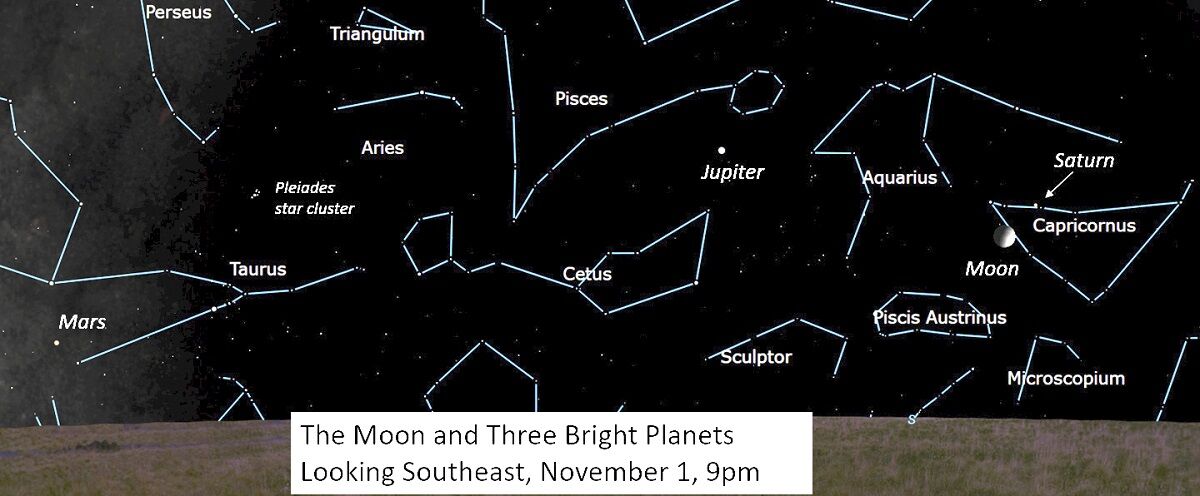
Skies are usually quite cloudy in November, but we can hope for some clear weather on Nov. 8. On that date, early in the morning, we will be g…
From
To

November is here, a month noted for rain (a good thing this year), colder weather, and a month not very cooperative when it comes to clear ski…

Welcome to 2021! Another year to view the wonders of the night sky. January will feature the usual wonder of the bright constellations of wint…

Here we are already at December, the year’s last month. In addition to the winter solstice and the Geminid meteor shower, this December will f…

Warmer nights make stargazing more comfortable in May

Welcome to March, the month when spring begins and when we “spring” forward to daylight savings time. Change to Daylight Standard Time (DST) occurs first, on March 8. Set your clocks ahead one hour. Spring officially begins March 19, when the Sun is directly above Earth’s equator, and the length of day and night are approximately equal.

Most of you reading this probably do not own a telescope….or don’t think you do. But most of you own a pair of binoculars—and they can be very nice low-power telescopes. Best are those with larger objective lenses, 50mm or 40mm, but even smaller ones can work well.

Featured
December is here, the last month of the year, and it brings us Christmas and the winter solstice. Clear nights are rare, but when they are clear darkness comes early—and there are always interesting things to see in the evening sky. Just bundle up!

With November, our rainy season is normally in full swing.
That’s important, as precipitation replenishes our landscapes after a dry summer and we begin to build a mountain snowpack. But alas, this also means lots of cloudy skies and limited opportunities for stargazing. But when the clouds do part, enjoy the view of fresh snow in the mountains, and look skyward when darkness comes!

Featured
Welcome to October, our first full month of autumn.
Days are now shorter than nights, as the Sun drops lower in the southern sky. Hopefully we will have some clear skies, because the earlier nightfall brings the heavens into view at a much more reasonable time.


